

Why Intentional Spaces Sell Faster
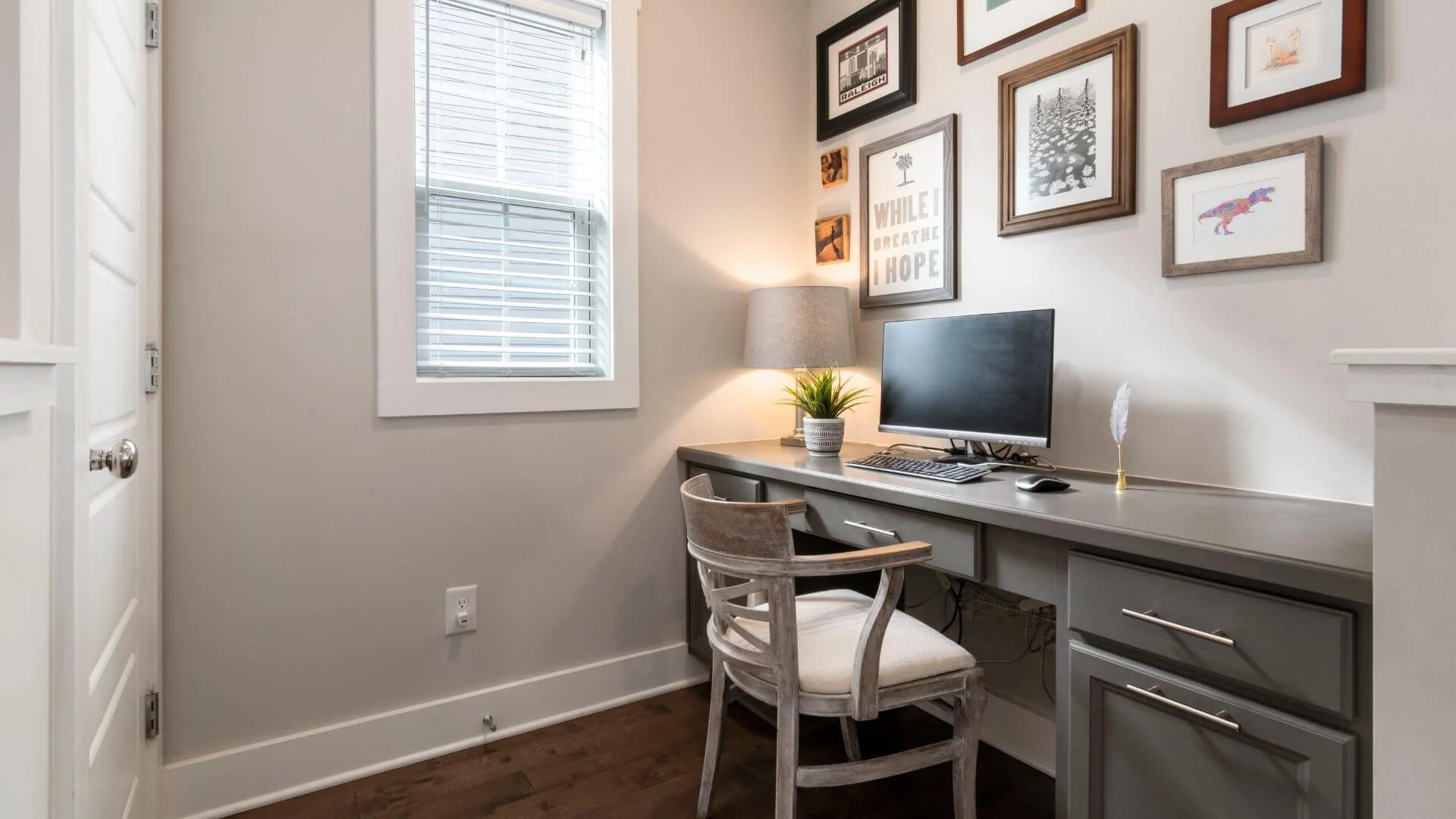
There's a difference between a house that's been staged and a home that feels intentional.
Staging is a costume. It's designed for photos and open houses, and most buyers can sense it the moment they walk in. Intentional design is something else entirely. It tells a story about how life actually works inside a space. How daily rhythms flow. Where stress gets absorbed. Where comfort lives.
That distinction matters more than most sellers realize.
Homes with purposeful layouts and thoughtfully designed spaces tend to sell faster, generate stronger emotional responses, and receive more competitive offers. Because buyers aren't just purchasing square footage anymore. They're purchasing functionality, clarity, and some relief from the relentless pace of modern life.
Here's why intentional spaces have become one of the most powerful accelerators in real estate.
Intentional Spaces Eliminate Mental Labor
The average homebuyer is already carrying a heavy cognitive load before they ever walk into a showing.
They're juggling financing decisions, timelines, moving logistics, interest rates, and the emotional weight of one of the largest decisions of their lives. When they walk into a home with unclear or chaotic spaces, their brains have to do additional work just to answer basic questions.
What is this room supposed to be? How would I use this? Would this actually work for my life?
That uncertainty creates friction. And friction slows everything down.
A "bonus room" filled with random storage bins, old exercise equipment, and undefined furniture forces buyers into analytical mode rather than emotional connection. Analytical buyers move slower. They second-guess. They come back for second showings they shouldn't need.
Intentional homes assign a clear identity to every square foot:
A dedicated home office
A reading nook with built-in shelving
A mudroom with organized storage
A wellness corner for meditation or yoga
A breakfast nook designed around natural light
These spaces communicate purpose immediately. The buyer doesn't have to imagine functionality. They experience it the moment they walk in.
And the moment buyers can picture themselves using a space, something shifts. They stop evaluating the house. They start living in it emotionally. Attachment increases, decision-making accelerates, and resistance drops.
Intentional Design Signals Hidden Value
There's a psychological halo effect that intentional homes create almost automatically.
When buyers notice that a homeowner paid close attention to the small details, they tend to assume the important systems received the same care. The roof. The HVAC. The maintenance history. That assumption builds trust, and trust reduces hesitation during negotiations.
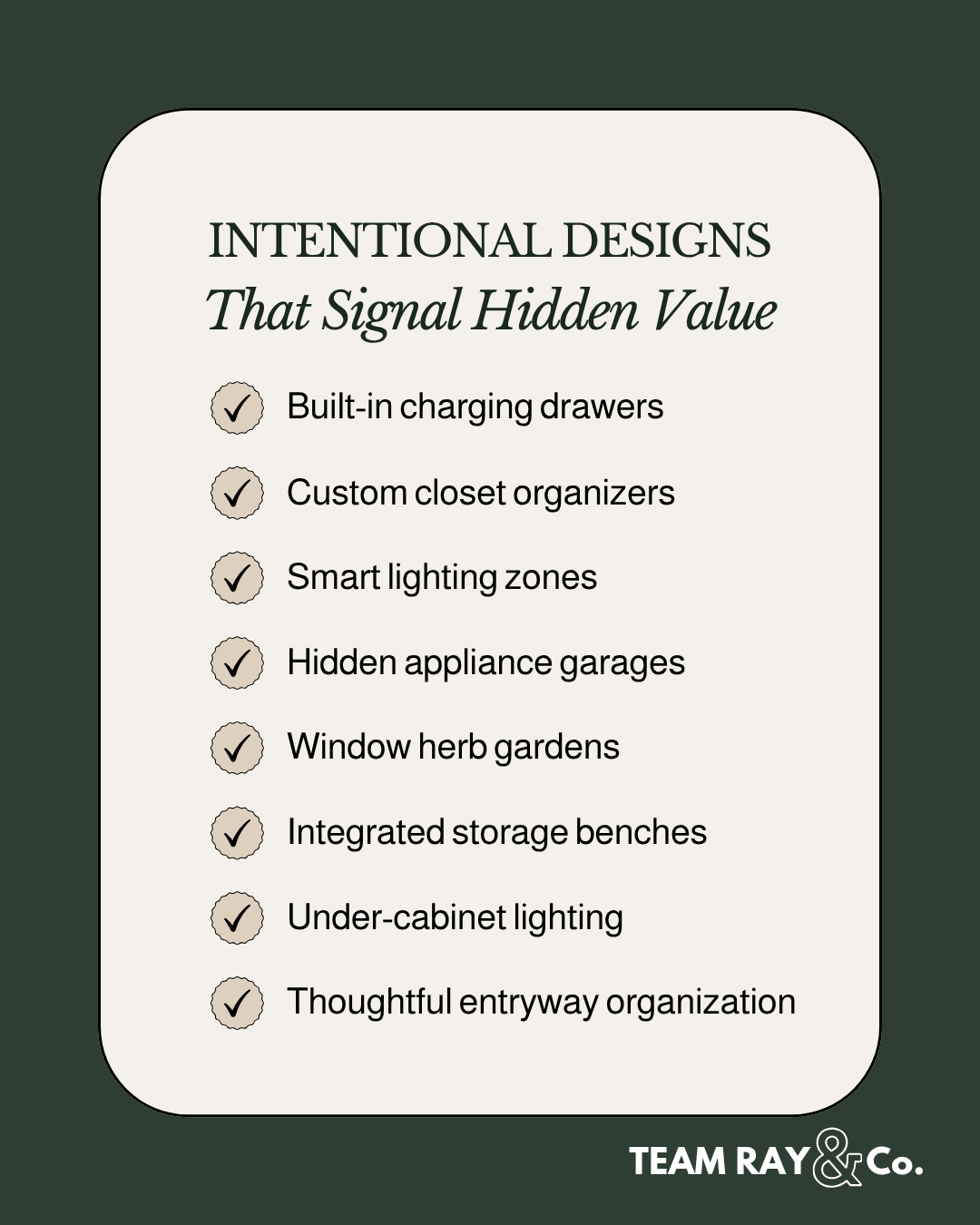
Small intentional features that create outsized impressions:
Built-in charging drawers
Custom closet organizers
Smart lighting zones
Hidden appliance garages
Window herb gardens
Integrated storage benches
Under-cabinet lighting
Thoughtful entryway organization
None of these are necessarily expensive. But together they make a home feel highly considered. They suggest long-term planning, pride of ownership, and a kind of care that buyers quietly notice and respond to.
A home that feels well-thought-out feels safer to buy.
The Power of Micro-Moments
The homes that leave the strongest impressions are rarely defined by square footage alone. They're defined by experiences.
Intentional spaces are built around human rituals. What designers sometimes call micro-moments: the small lifestyle experiences that buyers subconsciously crave but can rarely articulate until they feel them.
Morning coffee in a sunlit breakfast nook
Reading beside a fireplace on a rainy evening
Hosting friends around an outdoor fire pit
Quiet journaling in a cozy corner chair
Cooking while children do homework nearby
These moments become emotional anchors during showings. They're what buyers are still thinking about on the drive home.
The difference between staging and intentionality lives here. A staged patio says: this is outdoor furniture. An intentional outdoor space says: this is where your friends gather on summer nights. That distinction changes everything about how buyers emotionally process a home.
When buyers imagine experiences rather than furniture layouts, the property becomes more memorable, more personal, and more emotionally desirable. They stop comparing specs and start imagining a life. And lifestyle sells faster than square footage ever will.
Intentional Lighting Creates Visual Hierarchy
Lighting is one of the most underestimated tools in real estate psychology.
Most homes rely on a single overhead ceiling fixture. Functional, yes. But it flattens a room and creates a clinical atmosphere that works against emotional connection. Intentional homes use layered lighting to guide attention, shape emotional perception, and direct the buyer's eye toward the home's most valuable features.
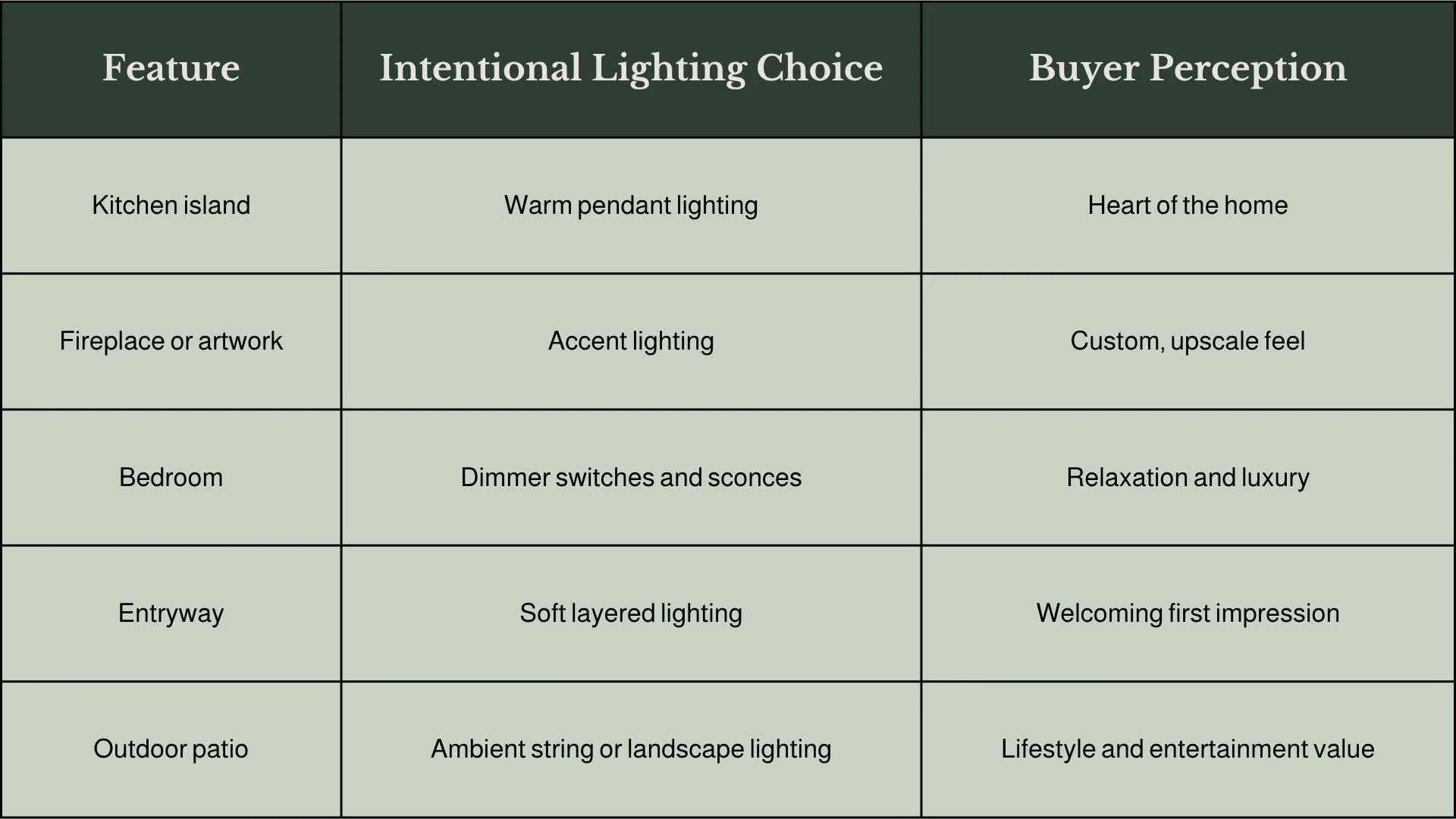
Layered lighting mimics the atmosphere of boutique hotels and high-end hospitality spaces. It elevates perceived value without expensive renovations. It makes a home feel curated rather than merely occupied.
Good lighting doesn't just illuminate a space. It tells buyers where to look and how to feel.
Intentional Homes Solve Modern Problems
Post-2020 living changed what buyers prioritize in ways the market is still catching up to.
For years, open-concept floor plans dominated real estate. But as people began working, exercising, parenting, and relaxing from home simultaneously, many discovered that openness without separation creates its own kind of stress. The fantasy of the open floor plan collided with the reality of Zoom calls, kids doing homework, and nowhere quiet to land.
Today's buyers increasingly value acoustic privacy, functional zoning, flexible workspaces, and purpose-driven layouts. They want:
Quiet spaces for focused work or calls
Dedicated areas for movement or exercise
Organized drop zones near entrances
Separate relaxation areas that feel genuinely separate
Multi-functional guest rooms
Flexible storage that actually works
A home that already solves these frustrations will almost always outperform one that requires buyers to figure it out themselves. When buyers feel a home already supports their lifestyle, they perceive less future effort, less renovation stress, and less uncertainty. That convenience creates momentum. In fast-moving markets, homes that feel ready for real life tend to generate stronger emotional urgency.
The Bottom Line
Intentional spaces sell faster because they feel complete.
Not perfect. Not extravagant. Complete.
Every shelf, light fixture, seating area, and transition feels purposeful. That sense of order creates emotional relief in a world where most people already feel overstimulated and stretched thin.
Intentional homes quietly communicate something that no listing description can fully capture: life works better here. This space supports you. You can exhale here.
That feeling is persuasive in a way that square footage and finishes simply aren't.
Because in the end, buyers aren't just purchasing property. They're purchasing the possibility of a calmer, easier, more organized life.
