

The Psychology of Home Transitions: Why Moving Is More Than Just a Change of Address

We talk about moving like it's exciting.
Fresh start. New opportunity. Major upgrade. And sometimes it is all of those things. But underneath the excitement, even in the best circumstances, moving is one of the most emotionally disruptive experiences a person can go through.
Psychologists rank it among life's most stressful events, right alongside divorce, job loss, and major financial upheaval. Not because of the logistics, though those are real. But because a home transition doesn't just change your address. It disrupts identity, routine, security, memory, and your sense of where you belong in the world.
Whether someone is downsizing, relocating, upgrading, or starting over after a major life event, the psychological weight of leaving one home and adapting to another is significant. And it's worth understanding, both for the people living through it and for anyone walking alongside them in the process.
Leaving a Home Means Leaving a Version of Yourself
There's a psychological concept called the Extended Self Theory that I think about often in this work.
It suggests that our homes and possessions aren't merely objects we use. Over time they become extensions of our identity. A home absorbs memories, rituals, relationships, and personal milestones until it stops being just a structure and starts being a container for who we were during the years we lived there.
Which means when people leave a home, they're often leaving behind an entire chapter of themselves.
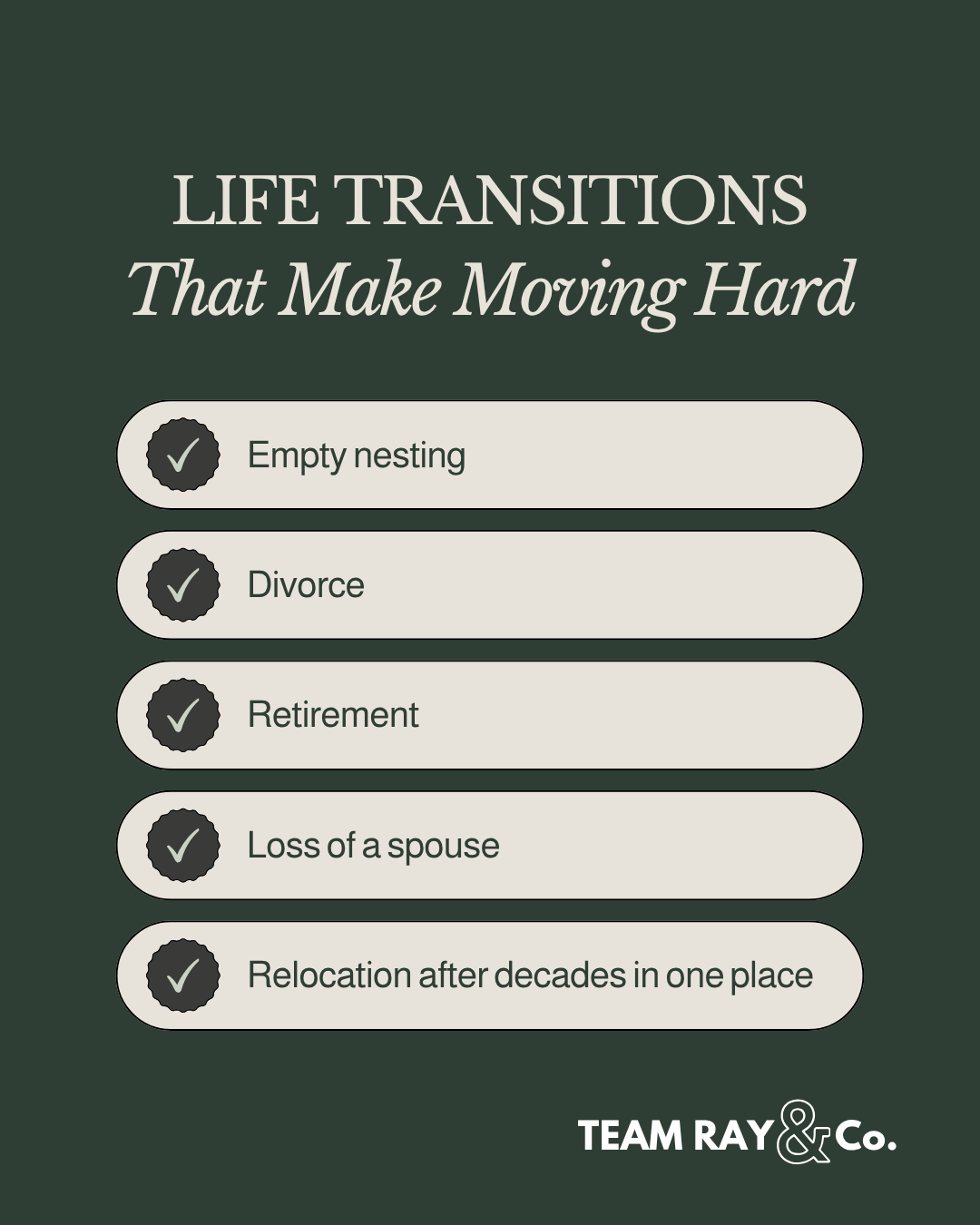
Even positive moves can trigger grief. This is especially true during major life transitions:
Empty nesting
Divorce
Retirement
Loss of a spouse
Relocation after decades in one place
The home becomes a physical representation of a previous identity.
The family home. The first place we bought together. The house where the kids grew up. The place where holidays happened.
Leaving that environment often requires emotionally disentangling memories from the physical structure itself. And that work is real, even when it's invisible.
For parents especially, this process can feel disorienting in a specific way. The home represented more than shelter. It symbolized the role of caregiving and family life. When children leave, the silence inside can feel like a kind of loss because the physical environment no longer matches the identity a person held for years.
The move, then, becomes symbolic. Not just of relocation. But of transformation.
Why New Homes Feel Mentally Exhausting
People consistently underestimate how much mental energy familiarity saves them every day.
In a longtime home, we develop what psychologists call environmental competence. Without consciously thinking about it, we know:
Which stair creaks
Where the light switches are
How the lock sticks
Which cabinet holds the coffee mugs
How sunlight moves through the rooms at different hours
The brain doesn't have to actively process any of it.
In a new home, that automatic familiarity disappears overnight.
Every sound feels unfamiliar. Every routine requires conscious effort. Every habit becomes interrupted. Simple things like making coffee, walking to the bathroom at night, or cooking dinner require actual thought again. The nervous system registers this as heightened alertness. The brain is scanning an unfamiliar environment, and it doesn't fully stand down until the space becomes known.
This is why new homes can initially feel disorienting or unsettled even when they're objectively beautiful. The brain isn't reacting to the aesthetics. It's reacting to the unfamiliarity.
Most people need anywhere from three weeks to several months to fully rebuild a new cognitive map of their environment and regain a sense of emotional regulation within the space. That adjustment period is normal. The brain simply needs time to transform unfamiliar territory into psychological safety.
The Anxiety of Living In Between
One of the hardest parts of moving is the transition period itself. The in-between.
Psychologists call this a liminal state: the uncomfortable space where one chapter has ended but the next one hasn't fully begun. Humans are biologically wired to seek stability, territory, routine, and familiarity. Moving disrupts all four simultaneously.
Living out of boxes, even temporarily, signals instability to the nervous system. Cortisol rises. Sleep gets disrupted. Irritability increases. Emotional fatigue sets in. The stress feels disproportionate to the physical labor involved because it is. The exhaustion is neurological as much as logistical.
One thing psychologists consistently recommend: establish one fully functioning comfort zone immediately after moving. Usually the bedroom. Bedding, lighting, familiar scents, personal rituals. Creating one emotionally grounded space helps signal safety to the nervous system even when the rest of the house is still in chaos.
Simple routines carry more weight than people realize during transitions:
Morning coffee rituals
Evening reading habits
Familiar blankets and textures
Favorite music
Consistent lighting
These small continuities restore a sense of self when everything else feels temporarily scrambled.
Moving Allows People to Try On a New Identity
Here's what I find genuinely beautiful about this process, even in its difficulty.
Moving creates a rare psychological opportunity: reinvention. Psychologists call it anticipatory socialization, the tendency to begin adopting the lifestyle and identity associated with a new environment before fully settling into it.
When buyers tour homes, they aren't just evaluating square footage and finishes. They're subconsciously exploring future versions of themselves.
A nearby park becomes an imagined running habit. A large dining room becomes a vision of hosting family dinners again. A peaceful home office becomes a more focused, productive self. A garden becomes a slower, more intentional life.
This is why homebuying is so emotionally charged. People aren't simply purchasing property. They're purchasing a future self. The home becomes a mirror for who they want to become.
And there's real science behind that feeling. Environmental psychology shows that habits are heavily tied to physical surroundings. When people move, old triggers disappear, routines become interrupted, and behavioral patterns loosen. That disruption, as uncomfortable as it feels, creates a genuine window to establish healthier habits, better routines, and new priorities.
A move functions like a psychological reboot. The discomfort is part of the opening.
Why Sellers Struggle: The Endowment Effect
For sellers, one of the greatest psychological challenges is something called the Endowment Effect.
This cognitive bias causes people to assign greater value to things simply because they own them. In real estate, that emotional attachment shapes the entire selling process in ways that can be difficult to see clearly from the inside.
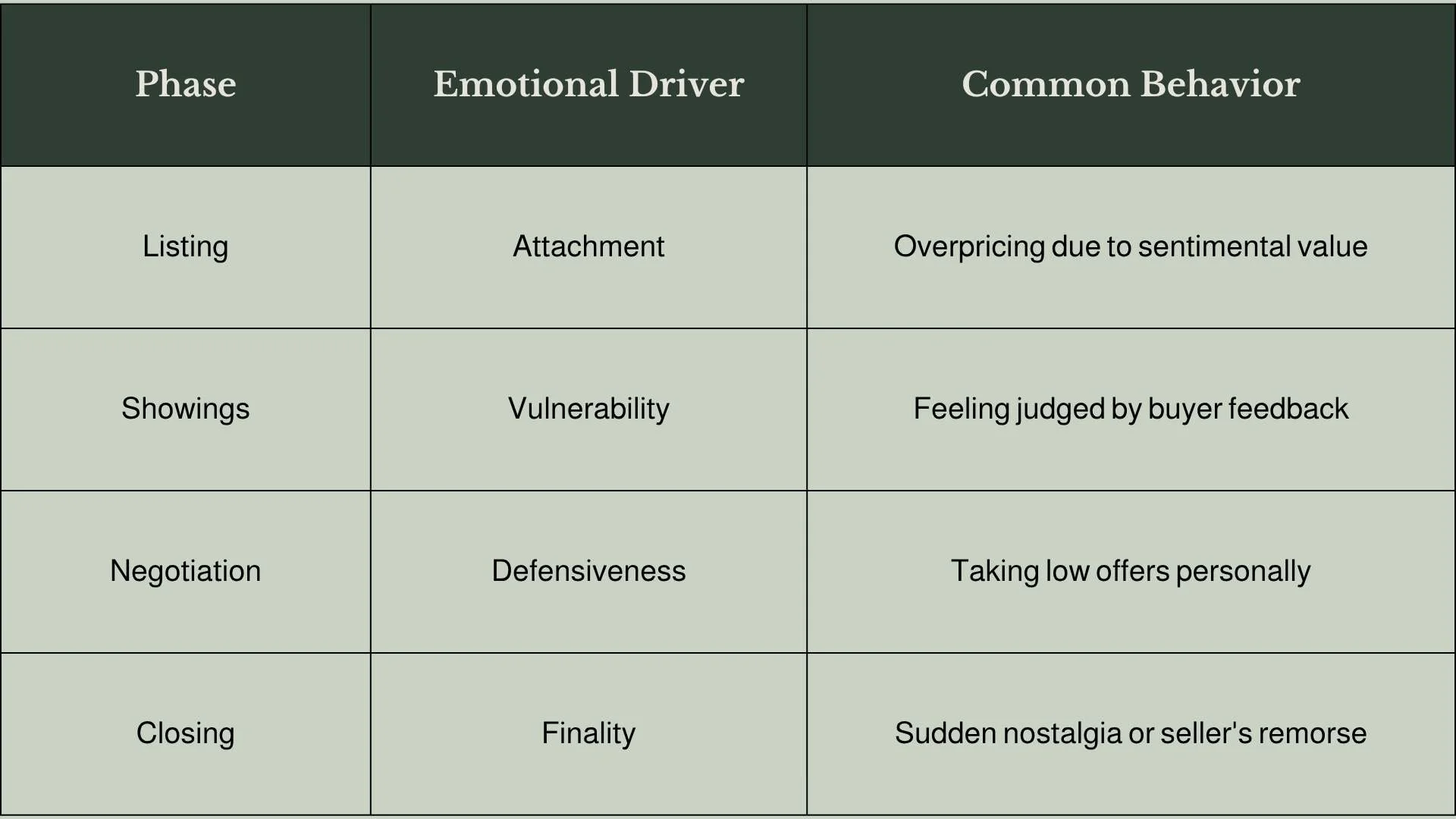
Homeowners don't see square footage and flooring. They see birthday parties and family dinners and childhood milestones. That emotional layering makes objective pricing genuinely difficult. It isn't stubbornness. It's grief wearing the mask of market analysis.
Understanding the Endowment Effect allows sellers to begin making a necessary psychological shift: the home gradually transitions from a personal memory vessel into a marketable product. That shift is essential for navigating negotiations with clarity and emotional balance. And it rarely happens all at once. It happens slowly, with patience and self-compassion.
A Final Thought
A home transition is rarely just about changing addresses.
It's a crossing point between past and future, between familiarity and uncertainty, between old identities and emerging ones. It holds grief and possibility in the same breath. It asks something real of the people moving through it.
The discomfort of transition exists because home is deeply tied to who we are. And that connection, as emotionally complex as it can feel in the middle of it, is also what makes finding the right home feel so meaningful.
Moving is hard because home matters.
And understanding that can change everything about how we walk through the process, and how we walk alongside others who are.
