

The Architecture of Calm: Designing a Home for Mental Clarity
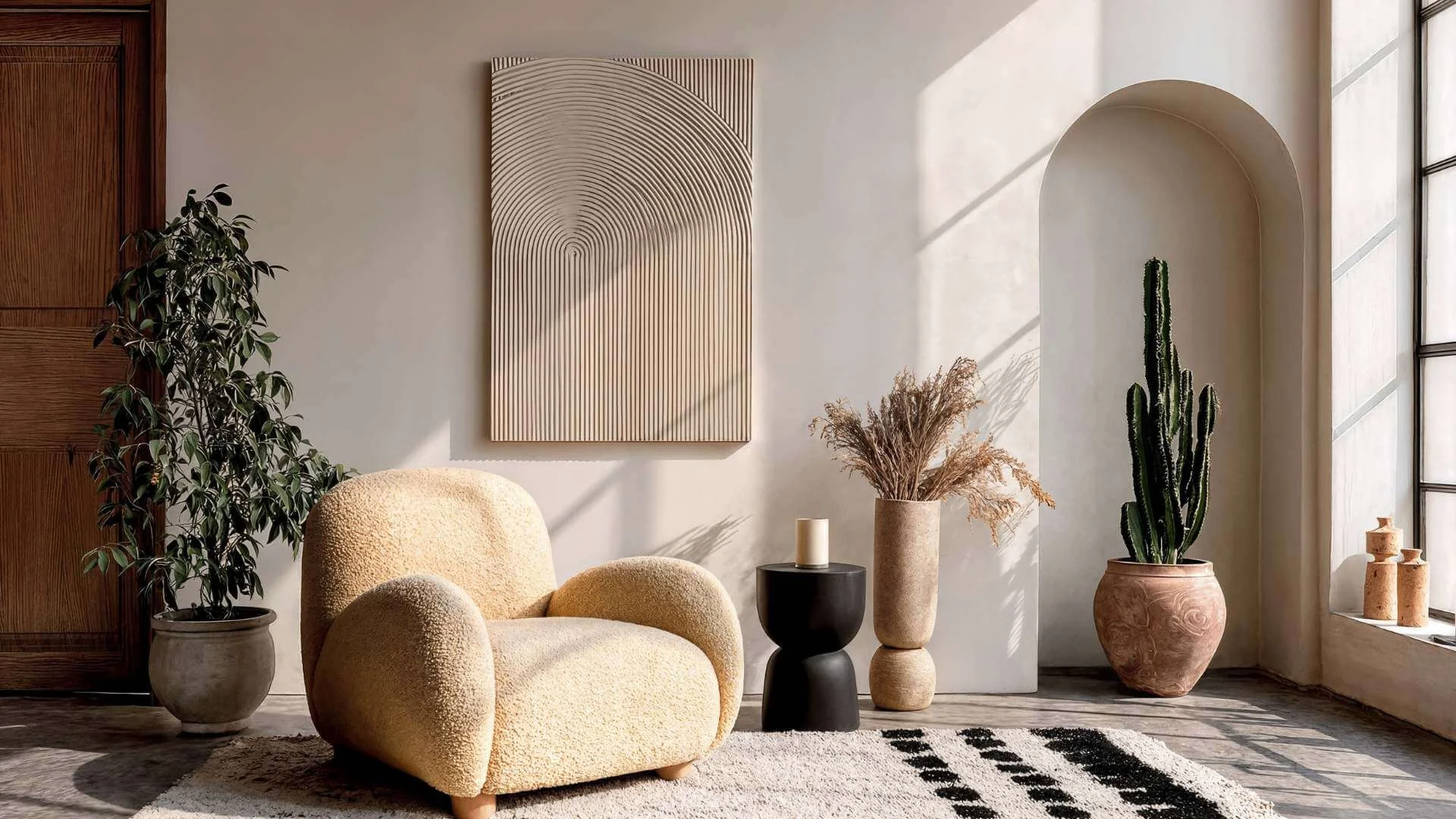
The modern home has become something it was never quite designed to be.
Not just shelter. Not just a place to store your things and sleep. A recovery space. A place where the nervous system can finally stop bracing.
More people are beginning to recognize that the way a home feels can directly influence stress levels, focus, emotional regulation, sleep quality, and mental clarity. That recognition has fueled growing interest in neuro-architecture, the study of how the built environment affects the human brain.
The core insight is simple: our surroundings are constantly shaping our nervous system responses. Certain environments heighten cortisol and overstimulation. Others encourage calm, focus, and restoration.
Designing for mental clarity requires a shift in perspective. Away from what looks impressive and toward how does this space make me feel.
The most calming homes are rarely accidental. Here are six design principles that help create one intentionally.
The Power of Negative Space
Mental clarity often begins with visual simplicity.
When a room is overloaded with objects, colors, and competing focal points, the brain is forced to process excessive visual information. This creates low-level cognitive fatigue, even when we don't consciously recognize it. Research consistently links cluttered environments to elevated stress hormones, decision fatigue, and feelings of overwhelm.
Negative space, intentionally empty areas within a room, gives the mind somewhere to rest.
This doesn't mean a home needs to feel sterile or cold. The goal is intentionality rather than emptiness. Some practical ways to get there:
Keep countertops mostly clear
Use concealed storage instead of open shelving
Limit competing décor styles
Create one clear visual focal point per room rather than several
Allow generous spacing between furniture pieces
The brain relaxes when it doesn't have to constantly work to interpret its environment. Visual breathing room isn't a design luxury. It's a cognitive one.
Fractal Patterns and Nature-Inspired Geometry
Humans are biologically wired to respond positively to patterns found in nature.
These repeating organic forms, called fractals, appear in fern leaves, tree branches, ocean waves, and river systems. Research suggests that exposure to fractal patterns can meaningfully reduce stress and mental fatigue. Unlike rigid geometric repetition, natural fractals feel complex yet balanced, stimulating the brain without overwhelming it.
This is one reason why organic interiors often feel more emotionally comforting than ultra-sharp minimalist spaces. The goal is subtle complexity: enough texture to feel alive without creating visual chaos.
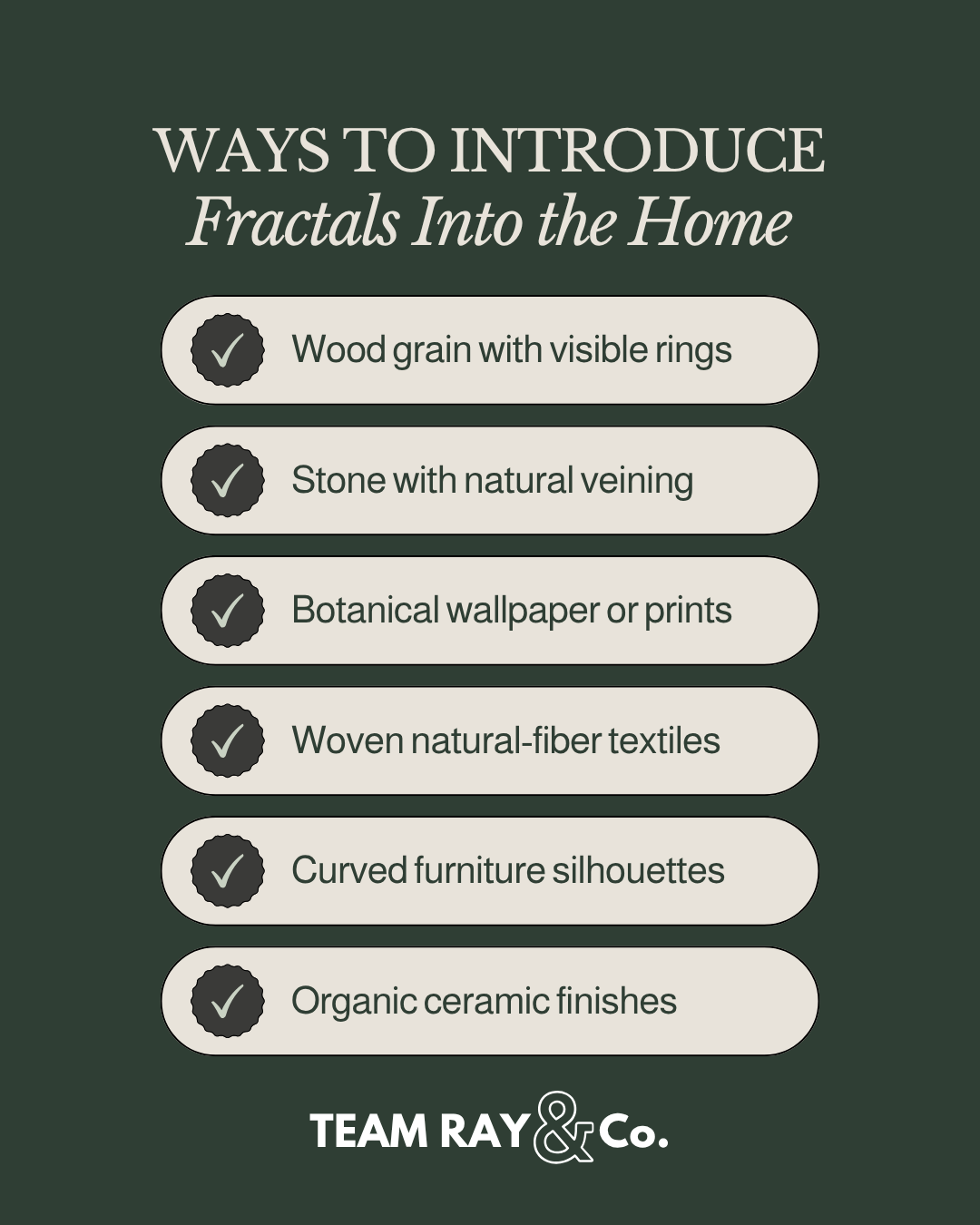
Ways to introduce fractals into the home:
Wood grain with visible rings
Stone with natural veining
Botanical wallpaper or prints
Woven natural-fiber textiles
Curved furniture silhouettes
Organic ceramic finishes
Zones: Giving Each Space One Job
One of the biggest threats to mental clarity is what designers sometimes call the "blurred home."
When every room serves every purpose, the brain struggles to shift mental modes. If you answer emails at the dining table, work from the couch, and watch television in bed, the nervous system never fully disengages. Over time, that creates a lingering sense of restlessness that follows you from room to room.
The brain relies heavily on environmental cues. Distinct spaces help trigger specific psychological states: focus, rest, creativity, relaxation, social connection. Without those cues, the mind stays partially on alert all day.
You don't need a large home to create meaningful separation. Subtle sensory distinctions between zones are enough:
Workspace: Crisp, cooler lighting. Structured seating. Citrus or cedar scents.
Bedroom: Soft textures, warm lighting, lavender or sandalwood. Nothing that signals productivity.
Reading nook: Cozy fabrics, lower light, natural materials. A place the body associates with slowing down.
These distinctions train the brain to transition smoothly between mental states rather than carrying the weight of one into the next.
Acoustic Softening: The Sound of Calm
Most people design homes almost entirely for visual appeal. But mental clarity is deeply affected by sound.
Hard surfaces like glass, tile, concrete, hardwood, and metal reflect sound waves and create subtle echo effects that keep the nervous system quietly stimulated. Even low-grade background noise can increase stress, irritability, and difficulty concentrating. This is one reason luxury hotels and wellness retreats prioritize acoustic softness so deliberately. Quiet feels luxurious because quiet feels safe.
The goal isn't silence. It's softness. Materials that absorb rather than reflect:
Wool rugs in open spaces
Heavy drapery over large windows
Upholstered furniture
Layered textiles
Bookshelves, which naturally break up sound
Acoustic panels disguised as artwork
Soft-close cabinetry
A home should feel like a refuge from the constant background hum of modern life, not an extension of it.
The Psychology of Color
Color dramatically influences cognitive and emotional responses. Certain tones stimulate energy and urgency. Others reduce nervous system activity and encourage calm.
For homes designed around mental clarity, softer and nature-inspired palettes tend to perform best:

Earth-inspired tones feel calming because they subconsciously mirror forests, sky, stone, sand, and water. They reduce visual aggression and create smoother emotional transitions throughout the home.
Highly saturated colors and intense contrasts can be energizing in small doses, but overuse tends to increase mental stimulation rather than reduce it. The most calming interiors typically layer neutrals, keep tones muted, and let natural materials carry most of the visual interest.
Tactile Grounding Through Texture
Modern life is increasingly screen-based. Hours spent touching glass, plastic keyboards, and smooth synthetic surfaces. Many designers now emphasize what's called tactile grounding, the use of physical texture to reconnect people with the sensory world and pull the brain out of repetitive thought patterns and back into the present moment.
The nervous system responds positively to environments that feel physically rich and varied. Layered tactile materials create warmth, comfort, and a kind of embodied calm that visual design alone can't achieve.
Effective texture pairings:
Cool stone with warm wood
Velvet with linen
Soft wool with smooth leather
Rough ceramics with polished surfaces
Chunky knit fabrics alongside sleek furniture
High-impact grounding materials include natural wood, limestone, clay, linen, wool, handmade ceramics, and textured plaster.
A calming home should feel lived-in, tactile, and human. Not overly polished. Not sterile. Like something that holds you rather than impresses you.
The Bottom Line
Designing for mental clarity isn't about creating an empty minimalist box. It's about building an environment that actively supports emotional and cognitive well-being.
When thoughtfully designed, a home becomes more than a place to sleep or store belongings. It becomes a recovery space. A focus tool. A place where the nervous system finally gets to exhale.
In a world that constantly competes for our attention, calm has become one of the most valuable things a home can offer.
