

The Quietest Room in the House: Making Room for Christmas, Rest, and Everything December Brings

The quietest room in the house may be the one we need most in December.
There is a particular feeling that arrives with the season. Everything seems to become a little louder and a little fuller. Calendars fill up, plans are made, packages arrive, decorations come out of storage, grocery lists grow longer, and conversations turn toward Christmas.
Our homes change, too. We begin noticing what needs cleaning before guests arrive, what needs decorating, what needs fixing, and where everyone will sit when the family comes over. We think about the table, the guest room, the extra chairs, the food, the lights, the gifts, and all the little details that somehow become part of making Christmas feel like Christmas.
There is something wonderful about all of that. Preparing a home for the people we love can be part of the joy of the season.
But there is also a point when preparation can become so constant that we forget to experience what we have been preparing for.
December can fill every room with activity. It can also remind us to make room for stillness.
Maybe that means leaving one corner of the house undecorated. Sitting down without a list nearby. Turning off the television and the music for a little while. Letting the dishes wait. Taking a few quiet minutes before the next gathering, errand, or obligation.
Our homes don't have to be busy to feel welcoming.
Sometimes, the most meaningful room in the house is the one that gives us permission to stop.
Christmas Has a Way of Filling the House
Christmas rarely arrives quietly. Even before the actual holiday, our homes begin to change. A tree appears in the living room. Decorations come out of boxes. The kitchen becomes busier. The dining table may disappear beneath wrapping paper, packages, cards, or things waiting to be organized. The refrigerator seems to fill overnight.
Some of us love this part. There is pleasure in unpacking decorations we've had for years and remembering where they came from. There is something comforting about making a familiar room feel different for a few weeks. We may pull out ornaments that belonged to our parents, find an old decoration made by a child, or rediscover something we forgot we had.
But Christmas preparation can also quietly become another list of responsibilities. Clean the house. Buy the gifts. Wrap everything. Plan the meals. Check the budget. Respond to invitations. Arrange travel. Remember everyone's preferences. Make sure there is enough food. Make sure there are enough chairs. Finish the work that needs to be finished before the year ends.
By the time Christmas arrives, we can sometimes feel as though we've been preparing for it for weeks without having had much time to enjoy it. That is worth noticing.
The Home Doesn't Have to Be Perfect
There is a particular kind of pressure that can come with having people over during the holidays. We want the house to look good. We want people to feel welcome. We want the meal to come together. We want everything to be ready when everyone arrives.
But hospitality doesn't require perfection.
People are not coming into our homes to inspect them. They are coming to spend time with us. The dishes might not match. The house might look lived in. There might be toys on the floor, mail on the counter, or a room that didn't quite get cleaned. Someone may spill something. Someone will probably forget something.
None of that is likely to be what people remember.
They will remember sitting around the table. They will remember the conversation that lasted longer than expected. They will remember laughing in the kitchen, watching someone open a gift, drinking coffee the next morning, or sitting together after dinner when nobody felt ready to leave.
Sometimes preparing the home for Christmas means knowing when to stop preparing it.
The Christmas Budget Is Part of the Preparation Too
There is another part of December that deserves a place in the conversation: money.
Christmas can be beautiful, generous, and expensive all at once. There are gifts, food, travel, decorations, gatherings, donations, school activities, parties, shipping costs, and all the small purchases that don't seem significant until they begin adding up.
The pressure to make Christmas special can make it easy to spend beyond what actually feels comfortable. But a meaningful Christmas does not have to be an expensive one.
Before the month gets too far along, it can help to step back and decide what really matters to you rather than letting every invitation, tradition, advertisement, or expectation make the decision for you.
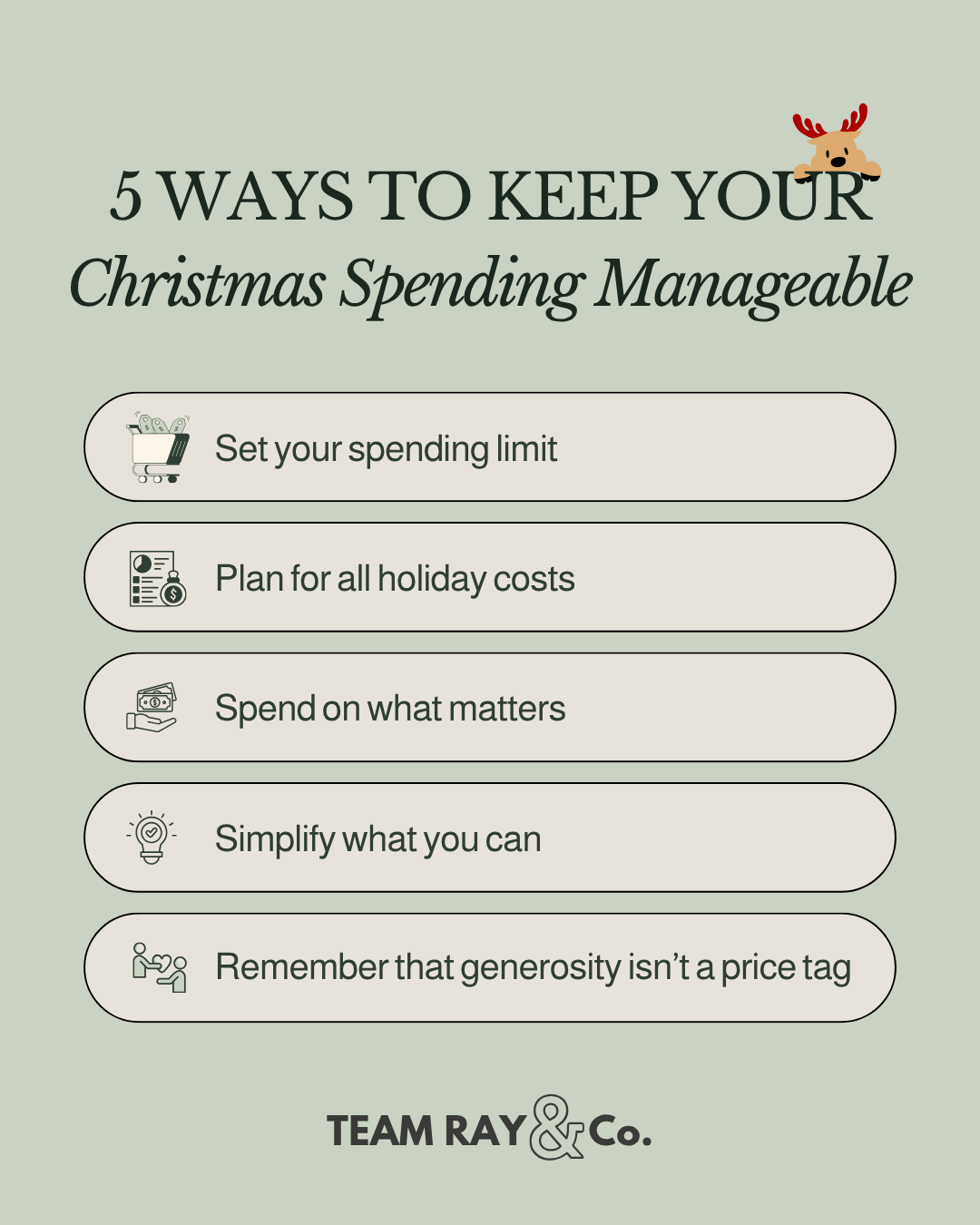
A simple budget can make the season feel lighter:
Decide what you can comfortably spend before you start buying.
Separate gifts from food, travel, gatherings, and other holiday expenses.
Look at the traditions that genuinely matter to your family and spend accordingly.
Give yourself permission to simplify something that has become unnecessarily expensive.
Remember that generosity doesn't have to be measured by the price of a gift.
Sometimes the most generous thing we can do for ourselves is refuse to begin the new year carrying financial stress created by the old one.
Make Room for the People You Actually Want to See
December calendars can become crowded very quickly. There are work gatherings, family dinners, neighborhood events, old friends reaching out, school activities, holiday parties, and people we haven't seen all year suddenly trying to find a time that works.
It can be tempting to say yes to everything. But friendship doesn't always need a big event around it.
Maybe this year, instead of trying to fit everyone into an already-full calendar, you send someone a message and suggest coffee. Maybe you invite a friend over for leftovers. Maybe you call someone you haven't talked to in months. Maybe you take a walk together instead of arranging an elaborate dinner.
The point isn't to see everyone. The point is to make room for the people who matter.
Some of the best moments of December may happen in the spaces between the official celebrations. A conversation at the kitchen counter. A neighbor dropping something off. A friend staying for another cup of coffee. Someone calling just to say hello.
Those moments don't need much preparation. They just need time.
Protect a Few Rest Days
This may be one of the most practical things we can give ourselves this Christmas.
Put a few days on the calendar when nothing is planned. Not "nothing planned unless something comes up." Actually nothing planned.
A day when the house can be messy. A morning when nobody has to leave early. An afternoon when you can watch a movie, read, take a nap, sit outside, cook something slowly, or simply stay home.
We often schedule the things we need to do and assume that rest will happen somewhere in between. It usually doesn't. Rest needs room too.
If December is already filling up, look at the calendar and deliberately protect a few spaces:
A slow morning with nowhere to be.
An evening without errands or commitments.
A day after a large gathering with no expectations attached to it.
Time to be home with the people who live there.
A little quiet before the new year begins.
These aren't wasted days. They may be what allows us to actually enjoy the days that are busy.
The Quietest Room in the House
This brings us back to that quiet room.
It doesn't have to be an actual room. It could be a chair by the window, the porch, the corner of the bedroom, the end of the couch, or the kitchen table after everyone has gone home.
What matters is that it is somewhere you don't have to accomplish anything.
December can make every part of the house feel occupied. There are presents to wrap, meals to prepare, things to clean, people to host, decorations to put away, and plans to coordinate. So perhaps it is worth deliberately keeping one small place free from all of that.
Put the phone somewhere else. Turn off the television. Leave the list for tomorrow. Sit down. Look outside. Drink something warm. Listen to the house.
You don't have to meditate. You don't have to reflect on the year. You don't have to make a resolution or think about what comes next. You can simply take ten minutes where nothing is required of you.
That may be harder than it sounds.
Preparing for the End of the Year
Christmas also sits in an interesting place on the calendar. It is a celebration, but it is also a threshold.
After Christmas comes the final week of the year, when we start thinking about what happened, what we didn't finish, what we want to change, and what we want the coming year to look like.
There can be pressure to use those final days productively too. Clean everything. Organize everything. Finish every project. Make the resolutions. Set the goals. Plan the year. Get ahead.
But the end of the year doesn't have to become another productivity project.
Some things can wait until January. Some things can remain unfinished. Some decisions can be made later, when there isn't so much noise around them.
Before rushing toward the next year, perhaps we can simply acknowledge the one that is ending. What changed? Who became important? What surprised you? What became easier? What was difficult? What do you want to carry forward? And what are you ready to leave behind?
You don't need a perfect answer to any of these questions. Sometimes noticing is enough.
Let Christmas Be What It Is
Every family has its own version of Christmas. For some, the house will be full. For others, it will be quiet. Some will travel. Some will stay home. Some will have a table surrounded by people, while others will have a smaller gathering than they expected. Some traditions will continue exactly as they always have. Others will change because life has changed.
That is part of the season too.
The holidays don't always look the way we imagined they would. Families grow and change. People move. Relationships change. Budgets change. Energy changes. Traditions that once felt effortless can become complicated, while new traditions appear almost by accident.
There is no single right way to celebrate.
Maybe this year Christmas needs to be simpler. Maybe it needs to be louder. Maybe it needs more people around the table. Maybe it needs fewer. Maybe the best thing you can give someone is a thoughtful gift. Maybe it is your time. Maybe it is a phone call. Maybe it is an invitation. Maybe it is the decision to stop trying to make everything perfect.
The important thing is to notice what this particular Christmas is asking of you.
Give Yourself Permission to Be Home
There is something lovely about the word home during the holidays.
It can mean the place where we live, but it can also mean the people we return to, the routines we recognize, the smells coming from the kitchen, the decorations we've seen for years, the chair that is always someone's chair, and the feeling of being somewhere we don't have to explain ourselves.
Christmas has a way of bringing all of those things closer to the surface.
So prepare the house. Put up the decorations you love. Make the food that matters. Welcome your friends. Call your family. Check the budget. Finish what genuinely needs finishing.
But leave some room too.
Leave room for the unexpected conversation. Leave room for a friend who stays longer than planned. Leave room for the afternoon when everyone is tired and nobody wants to do anything. Leave room for a walk after dinner. Leave room for a quiet morning. Leave room for yourself.
Because a home isn't only a place where life happens. It is also a place where we are allowed to pause between everything that happens.
And maybe that is one of the gifts worth giving ourselves this Christmas: not another thing to accomplish, but a little space to simply be where we are.
The year will end whether we finish every list or not. The house will eventually be cleaned. The decorations will eventually go back into their boxes. The leftovers will disappear. The calendar will turn.
For now, there is Christmas in the air.
Let yourself be here for it.
