

The Right to Decide: Why “Helping” Someone Doesn't Always Mean Deciding for Them

The right to decide is something we can easily overlook when we are trying to help someone we love.
There is a particular kind of love that makes us want to make things easier for the people we care about. We see a problem and want to solve it. We notice something isn't working and want to step in. We think we know what would make things better, faster, safer, or simpler.
Sometimes, that is exactly what someone needs.
But sometimes, helping can slowly become deciding.
It can happen in ordinary moments. Someone else chooses what goes into the refrigerator because they think it is healthier. A family member rearranges a room because they believe it makes more sense. Someone decides which belongings should stay and which should go. A relative starts making plans without asking what the person actually wants.
The intention may be good. But good intentions don't automatically make every decision ours to make.
When we care about someone, it can be difficult to watch them struggle with something we believe we could handle more easily. We may think we're saving them time, preventing a problem, or making things safer.
But there is an important difference between helping someone make a decision and making the decision for them.
Sometimes the most respectful thing we can do is slow down, ask what they want, and give them the opportunity to remain part of decisions that affect their own life.
Helping doesn't always mean taking over. Sometimes, it means making enough room for someone else to decide.
Helping and Taking Over Are Not the Same Thing
There is a difference between making something easier for someone and making the decision for them.
If someone asks you to carry the groceries, you're helping. If you decide what groceries they should eat without asking, you're making a choice on their behalf.
If someone asks you to help organize a closet, you're helping. If you decide which of their belongings are no longer worth keeping, you're taking over a decision that belongs to them.
The distinction can feel small in the moment, especially when we are trying to be useful. But over time, repeated decisions made for someone can leave them feeling as though their preferences no longer matter.
Support should create more room for someone to live their life, not quietly replace their voice in it.
The Everyday Decisions Matter
We sometimes think of independence as being able to manage everything without assistance. But independence can look much simpler than that. It can mean having a say in the ordinary parts of your own life, even when you need help carrying them out.
That might include:
Where you live.
What you eat.
What you wear.
What belongings you keep.
Who visits your home.
What routines matter to you.
How you spend your time.
What kind of help you are comfortable accepting.
Someone may need help preparing a meal and still want to choose what they eat. Someone may need help getting dressed and still want to choose what they wear. Someone may need help around the house and still want to decide how their home is arranged.
Needing assistance with a task doesn't necessarily mean giving up the right to decide how that task fits into your life.
The Question Before the Solution
One of the easiest habits we can develop is asking before acting.
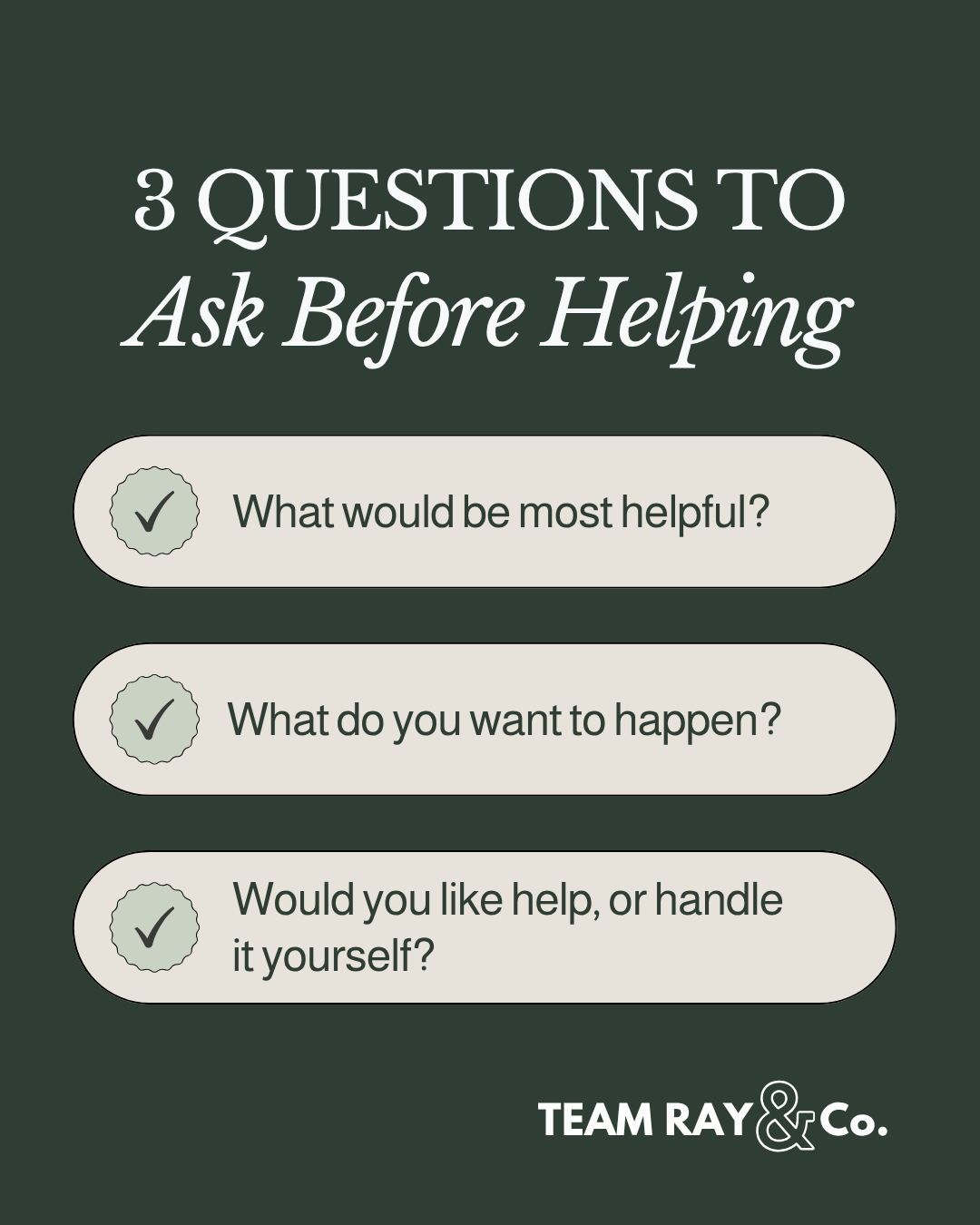
Instead of immediately saying, “I'll take care of that,” we can ask, “What would be most helpful?” Instead of deciding what someone should do, we can ask, “What do you want to happen?” Instead of assuming they need us to take over, we can ask, “Would you like me to help, or would you rather handle this yourself?”
These questions don't mean we have to stand back and do nothing. They simply give the other person a chance to tell us what support actually looks like for them.
Sometimes they'll want us to take care of everything. Sometimes they'll want us to do only part of it. Sometimes they'll want us nearby while they do it themselves. And sometimes they won't want help at all.
All four answers are possible.
When We Think We Know Best
This is where things can become complicated. We usually don't step in because we want to control someone. We step in because we care. We may have experience that makes us confident we know what would work. We may see a problem that the other person doesn't seem to notice. We may even be afraid that if we don't take over, something will go wrong.
But caring about someone doesn't automatically give us the right to make every decision for them.
There is a difference between saying, “I'm worried about this. Can we talk about it?” and saying, “I've already decided what we're going to do.” The first opens a conversation. The second closes one.
And conversations leave room for dignity, preference, and choice.
Support Can Still Be Strong
Respecting someone's decisions doesn't mean we have to agree with all of them. You can think someone is making a mistake and still respect their right to make a choice. You can offer an opinion without insisting that it be followed. You can explain a concern without turning it into a command. You can help someone understand their options without choosing the option for them.
In fact, some of the strongest forms of support look like this:
Offering information without pressure.
Helping someone understand their options.
Doing the parts they genuinely want help with.
Making a task easier without taking ownership of the decision.
Speaking up when you are concerned while still listening to the person's perspective.
Giving someone time to think instead of demanding an immediate answer.
There is strength in being able to support someone without needing to control the outcome.
A Home Is Full of Choices
The home is where this becomes especially visible because so many personal decisions happen there. Our homes hold our routines, our possessions, our habits, and the small choices that make daily life feel like our own.
Someone may have a particular chair they always sit in. They may organize the kitchen in a way that makes perfect sense to them. They may want certain photographs on the wall. They may prefer breakfast at a certain time. They may want friends to visit on weekends or prefer quiet evenings at home.
From the outside, some of these choices may seem unimportant. But when you are the person living there, they are part of what makes the place feel like yours.
That is why helping someone with their home should ideally begin with understanding how they experience it. Before moving the furniture, ask. Before clearing the shelves, ask. Before replacing something, ask. Before deciding what can be thrown away, ask.
Sometimes the answer will be, “Yes, please do that.” And sometimes it will be, “Actually, I like it this way.”
Both answers deserve to be heard.
Making Room for Choice
There is a quiet generosity in leaving room for someone else's decisions. It may take a little longer. It may not be the way you would do it. It may even require you to tolerate a little inefficiency.
But that can be part of caring for another person.
Not every decision needs to be optimized. Not every routine needs to be improved. Not every preference needs to be explained. Sometimes people simply need the freedom to say, “This is how I want it.”
And sometimes the most helpful response is, “Okay. How can I help you make that work?”
That question changes the role we play. We aren't deciding for them. We are helping them carry out their decision.
Independence and Support Can Exist Together
We often imagine independence and support as opposites. Either you can do something yourself, or someone else has to do it for you.
Real life is rarely that simple.
A person can need help and still be independent in many of the ways that matter most. They can need someone to drive them somewhere and still choose where they want to go. They can need help maintaining their home and still decide what stays in it. They can need assistance with daily routines and still have a voice in how those routines look.
Support doesn't have to erase independence. It can make independence possible.
The goal is not always to do everything alone. Sometimes the goal is to have enough support to keep participating in your own life.
The Right to Decide
Perhaps that is one of the most important things we can remember when we are helping someone we love: ask before assuming, offer before insisting, listen before solving, help with what they want help with, and when a decision belongs to them, give them the space to make it.
We will all need help at different points in our lives. Sometimes we will be the person offering it. Sometimes we will be the person receiving it. The roles may change, but the principle can remain the same.
Helping someone doesn't have to mean taking over their life. Sometimes the most respectful thing we can do is stand beside them, make the difficult parts a little easier, and leave the decision in their hands.
