

Learning to Trust Timing Instead of Urgency

Why Everything Feels Urgent
Speed is often rewarded. Quick decisions are framed as confident, decisive, and successful, while waiting is sometimes mistaken for hesitation or fear. Over time, this creates the feeling that any pause means falling behind.
This pressure quietly reshapes how choices are made. Momentum begins to matter more than alignment. Reaction takes priority over reflection. When urgency becomes the default, decisions are judged by how fast they happen rather than how well they support the life being lived.
The Difference Between Urgency and Readiness
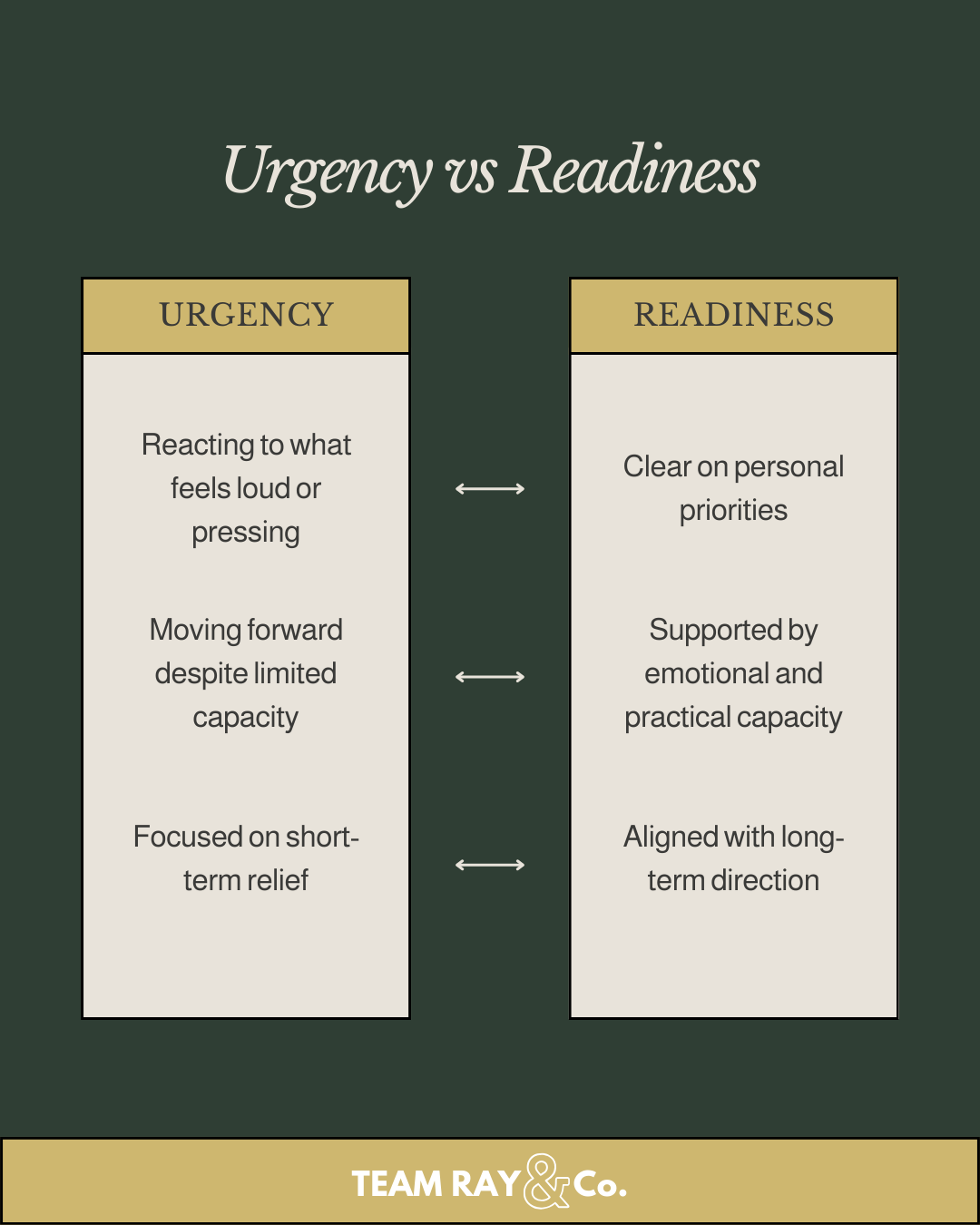
Urgency and readiness may feel similar, but they come from very different places. Urgency is usually driven by external pressure, comparison, or fear of missing out. Readiness grows from clarity, stability, and a sense of internal alignment.
It is possible to feel rushed without being ready, and fully ready without feeling rushed. Learning to recognize the difference helps decisions feel more grounded and sustainable over time.
Signs of readiness often include:
A clear sense of personal priorities
You understand what matters most right now and how the decision fits into those values, rather than reacting to what feels loud or pressing around you.Emotional and practical capacity to move forward
There is enough emotional bandwidth, time, and resources to support the decision without constant strain or overwhelm.Confidence that the choice supports long-term direction
The decision feels connected to where life is heading, not just to immediate relief or short-term pressure.
Urgency often lacks this grounding, pushing action before these elements are in place.
Waiting as an Active Choice
Waiting is often misunderstood as inaction, but it can be a deliberate and engaged choice. Waiting can be a time for gathering information, strengthening foundations, and allowing clarity to surface naturally.
Choosing to wait may involve:
Allowing emotions to settle before committing
Giving yourself space to respond from steadiness rather than stress or excitement.Giving room for better options to appear
Time often reveals alternatives that were not visible under pressure.Respecting personal pace rather than outside timelines
Choosing timing that aligns with your capacity instead of someone else’s expectations.
When waiting is intentional, it becomes an expression of self-trust rather than delay.
How Long-Term Thinking Shapes Decisions
Choices made under pressure often aim for immediate relief. Choices made with patience tend to support stability and alignment over time. Stepping back to consider where life is heading months or years ahead can bring clarity to decisions that feel confusing in the moment.
Long-term thinking invites questions such as:
Will this still feel right later
Does this support the life being built
Is this choice moving toward alignment or simply away from discomfort
These questions slow the process in a way that protects decision-making and reduces regret.
Trusting Yourself Through the Process
Trusting timing requires trusting yourself. It means believing in your ability to recognize when it is time to move and when a pause is the wiser choice. This trust develops through experience and through decisions that balance intuition with thoughtful consideration.
Not every opportunity requires an immediate response. Not every pause represents loss. In many cases, waiting is the most grounded and strategic choice available.
Urgency pushes action before readiness. Timing asks for listening. When space is allowed for alignment to guide decisions, choices tend to feel steadier, clearer, and more sustainable. Trusting timing is not about falling behind. It is about moving forward with intention.
