

Why Home Is More Than a Place and How It Supports Everyday Life

Home as Something We Feel
Home is often described through practical details such as size, location, and layout. Yet the experience of home extends far beyond physical features. Home is felt before it is defined. It is where the body relaxes at the end of the day, where routines settle into place, and where life feels manageable enough to move through with care.
Homes shape how we show up in the world. They hold energy, habits, and moments of transition. When a home feels supportive, daily life often feels steadier. When it feels unsettled, that tension can carry into other areas of life.
How Our Spaces Shape Daily Rhythm
The environment influences behavior in quiet, often unnoticed ways. Light, sound, clutter, and layout subtly guide how we move through our days, how we focus, and how we rest. Over time, home becomes the backdrop for daily rhythm, shaping emotional balance as much as productivity.
This influence shows up in simple, familiar patterns:
Calm spaces support rest and mental clarity
When a space feels visually and emotionally calm, the nervous system has room to settle. Fewer distractions make it easier to rest, think clearly, and feel present, even during busy seasons.Overstimulating spaces create tension and distraction
Excess noise, clutter, or visual input can keep the body in a low-level state of alert. This often leads to restlessness, difficulty focusing, or a sense that it is hard to fully relax, even at home.Thoughtful layouts support routines rather than complicate them
When spaces are arranged to align with daily habits, routines feel smoother and more intuitive. Movement becomes easier, transitions feel less effortful, and small moments of friction are reduced.
Over time, these details quietly shape whether daily life feels grounded and supportive or scattered and draining.
Home as a Place of Safety and Reset
Home is meant to offer a sense of safety that goes beyond physical comfort. Emotional safety matters just as much. It is the place where long days can be released, where change is processed, and where energy is restored without the need to perform or explain.
A supportive home provides a sense of permission to slow down. It allows for rest, reflection, and emotional regulation in a way that feels natural rather than forced. When home feels safe, it becomes easier to reset and show up more fully elsewhere.
Supportive homes do not require perfection. They require alignment with the life taking place inside them. A home that reflects real routines, needs, and rhythms offers far more support than one designed around an idealized image.
When Home Reflects a Season of Life
As life evolves, needs naturally shift. A home that once felt supportive may begin to feel heavy, limiting, or out of sync as routines change, families grow, or priorities realign. These moments are not failures. They are signals that something is asking to be adjusted.
Homes often reflect a previous season of life before that change is consciously acknowledged. Paying attention to what feels supportive and what feels burdensome creates space for gentle, intentional updates. When adjustments are made with awareness rather than frustration, home can continue to evolve alongside the people who live within it.
How to Create a Home That Supports You
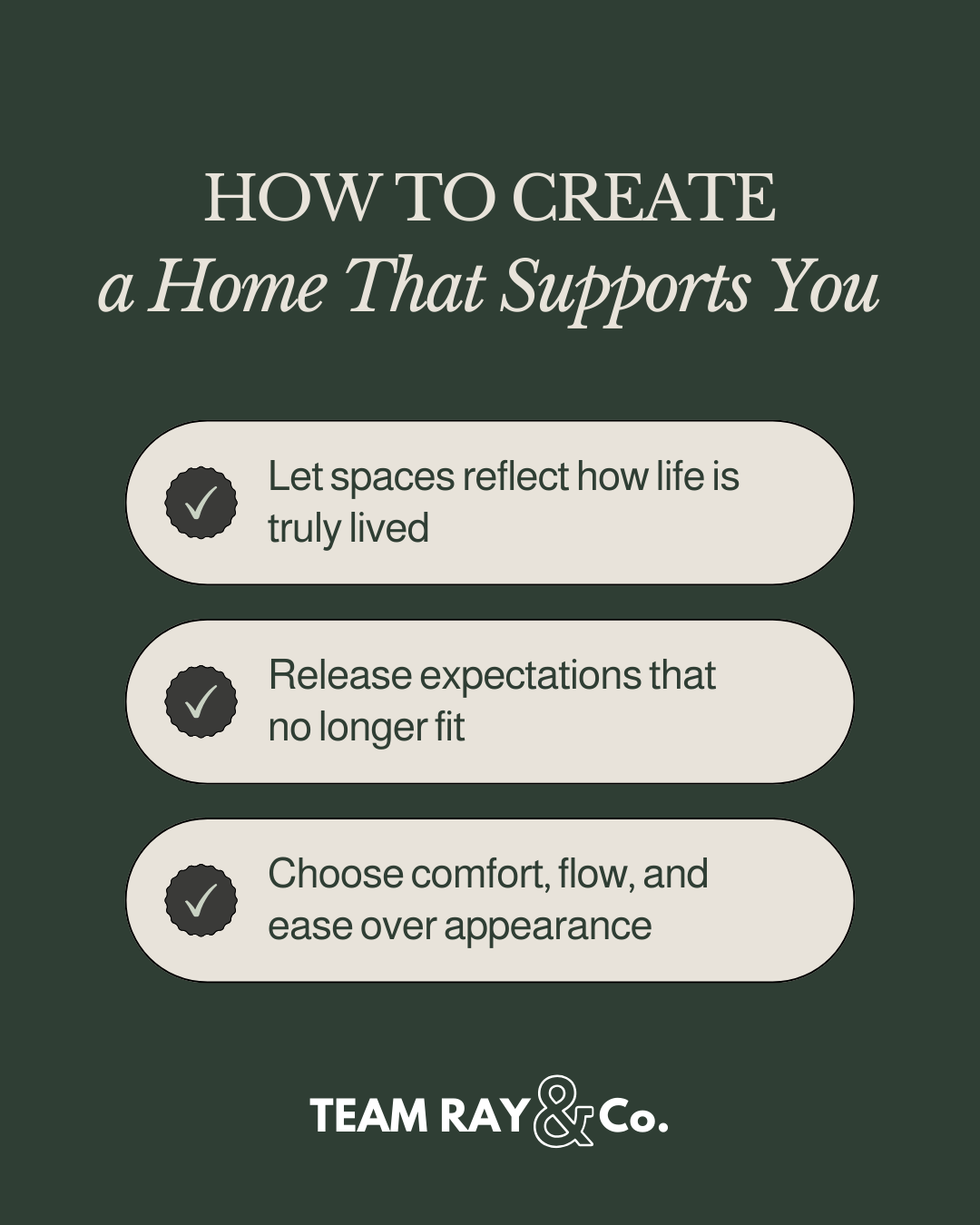
Supportive homes are rarely created through major changes alone. Small, thoughtful adjustments often make the biggest difference:
Allowing spaces to reflect how life is actually lived
Pay attention to how you truly use your home, not how you think it should be used. This might mean rearranging furniture to support daily routines, keeping frequently used items within easy reach, or embracing lived-in spaces that accommodate work, rest, and connection without constant resetting.Releasing expectations that no longer fit
Homes often carry outdated ideas of how rooms are supposed to look or function. Letting go of these expectations makes space for flexibility and growth. What worked in a past season may not serve you now, and adjusting your home accordingly can feel both practical and freeing.Choosing comfort, flow, and ease over appearance
A supportive home prioritizes how a space feels to move through and spend time in. Comfort, natural flow, and simplicity often matter more than perfect styling. When a home feels easy to navigate and comfortable to inhabit, it supports well-being without demanding constant upkeep.
These choices help home serve as a steady foundation rather than a source of pressure, quietly supporting daily life instead of competing with it.
Home is more than a place to live. It plays an active role in daily life. When a home supports its occupants, everything else tends to feel more manageable. Paying attention to how home feels is not self indulgent. It is a meaningful way to care for both the present moment and the life being built.
