

Choosing a Slower Rhythm in a Fast World

When Everything Feels Rushed
Lately, everything seems to be moving faster than it once did. Our days fill quickly, decisions stack up, and there is often an unspoken feeling that we should be keeping up better than we are. Many people carry a quiet sense of being behind, even when they are doing a lot right. This feeling rarely comes from failure. More often, it comes from living in a world that rarely pauses long enough for us to catch our breath.
Why We Feel the Pressure to Move Fast
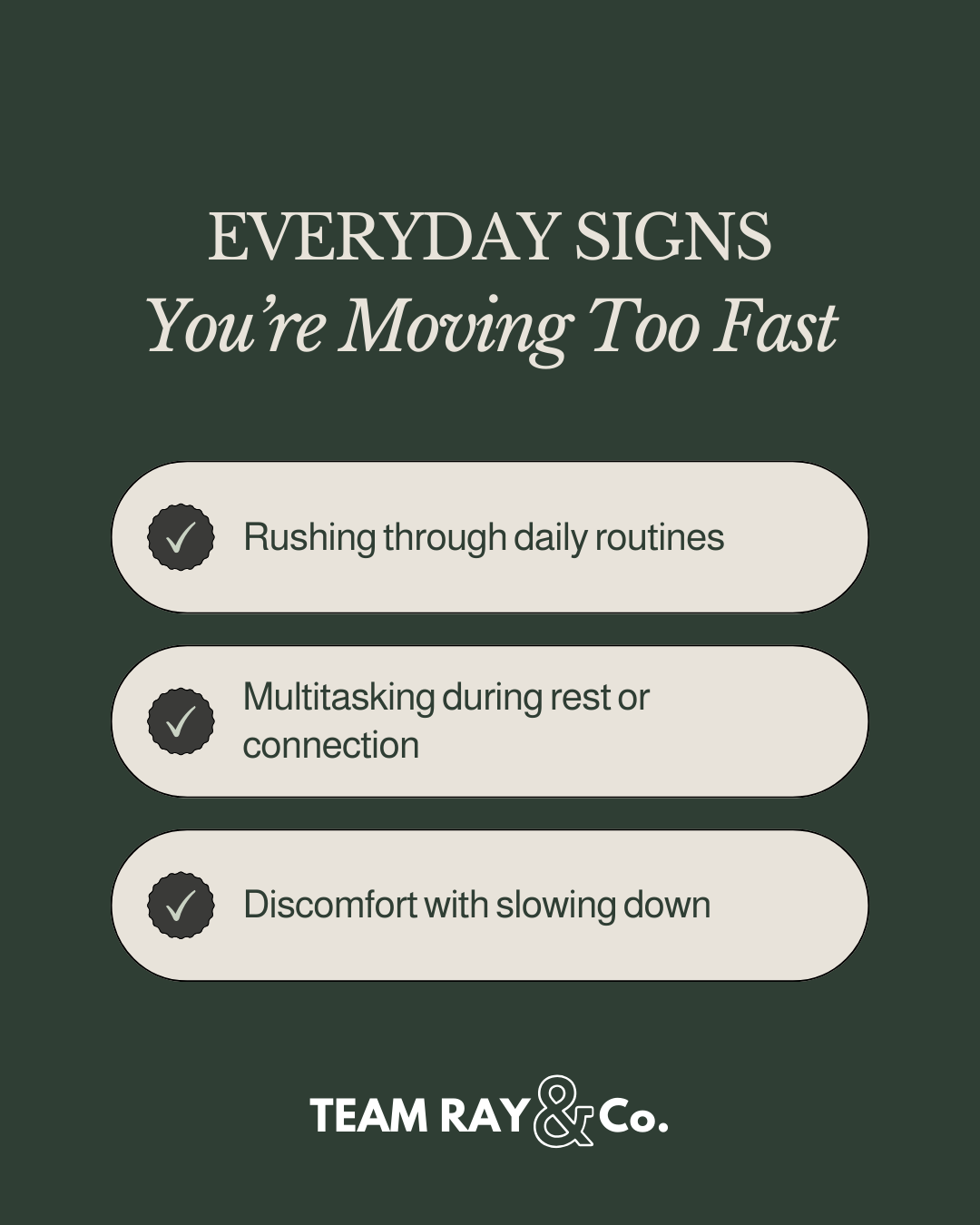
The pace of modern life rewards urgency. Productivity is often treated as proof of worth, and speed is mistaken for progress. Over time, this pressure becomes internalized and shapes how we approach our days. It shows up in subtle but familiar ways:
Rushing through routines without noticing how we feel
Multitasking through moments meant for rest or connection
Feeling uneasy or unproductive when things slow down
Eventually, moving quickly becomes the default, even when it no longer serves us.
The Cost of Constant Urgency
Living in a constant state of urgency has consequences that are easy to miss because they accumulate slowly. When everything feels rushed, it becomes harder to think clearly or feel settled in decisions. Even simple choices can start to feel heavier than they need to be. Over time, emotional fatigue builds quietly, often showing up as irritability, restlessness, or a persistent sense of being behind.
This pace tends to seep into our homes as well. Spaces become optimized for efficiency rather than restoration. Home turns into something we pass through between obligations instead of a place that offers grounding and relief. When there is no room to pause, even familiar environments can begin to feel draining. Eventually, this constant motion can leave us feeling unmoored, even when life appears full, productive, and successful on the surface.
Reframing Slow as Intentional
Slowing down is often misunderstood as disengagement, but a slower rhythm is not about doing less. It is about choosing with intention:
Directing energy and attention more deliberately
Making decisions with clarity rather than pressure
Noticing what is working and what needs to change
Trusting your own timing instead of constant comparison
Reframing slow as intentional allows life to feel more aligned, sustainable, and supportive rather than rushed or reactive.
How to Find a Slower Rhythm That Works for You
A slower rhythm is not about stepping away from life or falling behind. It is about creating enough steadiness to actually feel present in it. Most of the time, this shift begins with small, compassionate adjustments rather than dramatic change:
Create space between commitments
Give yourself room to breathe between what comes next. This might look like fewer back-to-back plans, longer transitions, or allowing yourself to arrive without rushing. Space helps the day feel less demanding and more humane.Let routines support you, not control you
Routines are meant to hold you, not pressure you. When they are shaped around how you want to feel rather than how much you can fit in, they bring calm and consistency instead of urgency.Let home be a place to land
Home does not need to impress or perform. When it is allowed to be grounding, familiar, and comfortable, it quietly supports a slower rhythm by giving you a place to reset and feel held.
These shifts may feel small, but over time they change how life moves. A slower rhythm makes room for clarity, rest, and a sense of being supported as you move through your days.
If life feels fast right now, it does not mean you are behind. It may simply be a signal that something in you is asking for a different pace. Slower can still be purposeful. Often, it is where clarity, steadiness, and intention begin.
