

Rooted Enough to Grow: Setting Midyear Intentions

We are at the midpoint of the year. This is a natural pause, a chance to look back, notice what has supported you, and decide how to move forward with purpose. The first six months have brought lessons, challenges, and small victories, many of which go unnoticed.
Doing a midyear review is beneficial because it helps you recognize progress, gain clarity, and make intentional choices for the months ahead. This is an invitation to pause, reflect, and take simple, grounded actions that can carry you through the next half of the year with calm, clarity, and momentum.
Reflection: Notice the Small Wins
Reflection is about acknowledgment, not judgment. Before setting intentions for the next six months, it is helpful to notice what has already worked and what gives you stability.
Try these reflective prompts:
Small supports: What daily practices or routines, no matter how small, have helped you feel grounded this year
Moments of calm or meaning: Which experiences gave you a sense of purpose, peace, or joy
Subtle growth: Where have you noticed changes in your mindset, habits, or relationships, even if they feel minor
Spend a few minutes journaling or mentally revisiting the past months. Patterns will emerge that reveal your strengths, resilience, and the habits that keep you steady.
Setting Intentions: Start Small and Stay Consistent
Once you have reflected on what supports you, you can begin setting intentions. A key principle is to start small and focus on what you can realistically do even on your worst day. Motivation often follows action, not the other way around, so the goal is to create momentum through tiny, repeatable steps.
Practical tips for intention-setting:
Make your goals specific and actionable: Broad goals can feel overwhelming and vague. Focus on clear, concrete actions that you can realistically take.
Example: Instead of “get fit, eat better, write more,” choose “walk 1,500 steps each morning, prepare three healthy lunches on Sundays, and write 300 words every evening.”Align goals with your energy and values: Make sure your goals reflect what is sustainable for you now, not what others expect
Example: If calm and connection matter most, a goal could be “host one family meal per week” rather than joining a new high-pressure social groupReduce the scope but stick to the schedule: Even if time or energy is limited, commit to a small action rather than skipping entirely
Example: If you planned an hour-long workout but only have 15 minutes, do a single set or a short movement practice. The key is showing upCelebrate small wins: Progress, no matter how minor, creates evidence that you are moving forward. This builds motivation naturally
Example: Completing a five-minute walk or one page of reading becomes a reminder: “I am capable of following through”
Building Habits That Stick
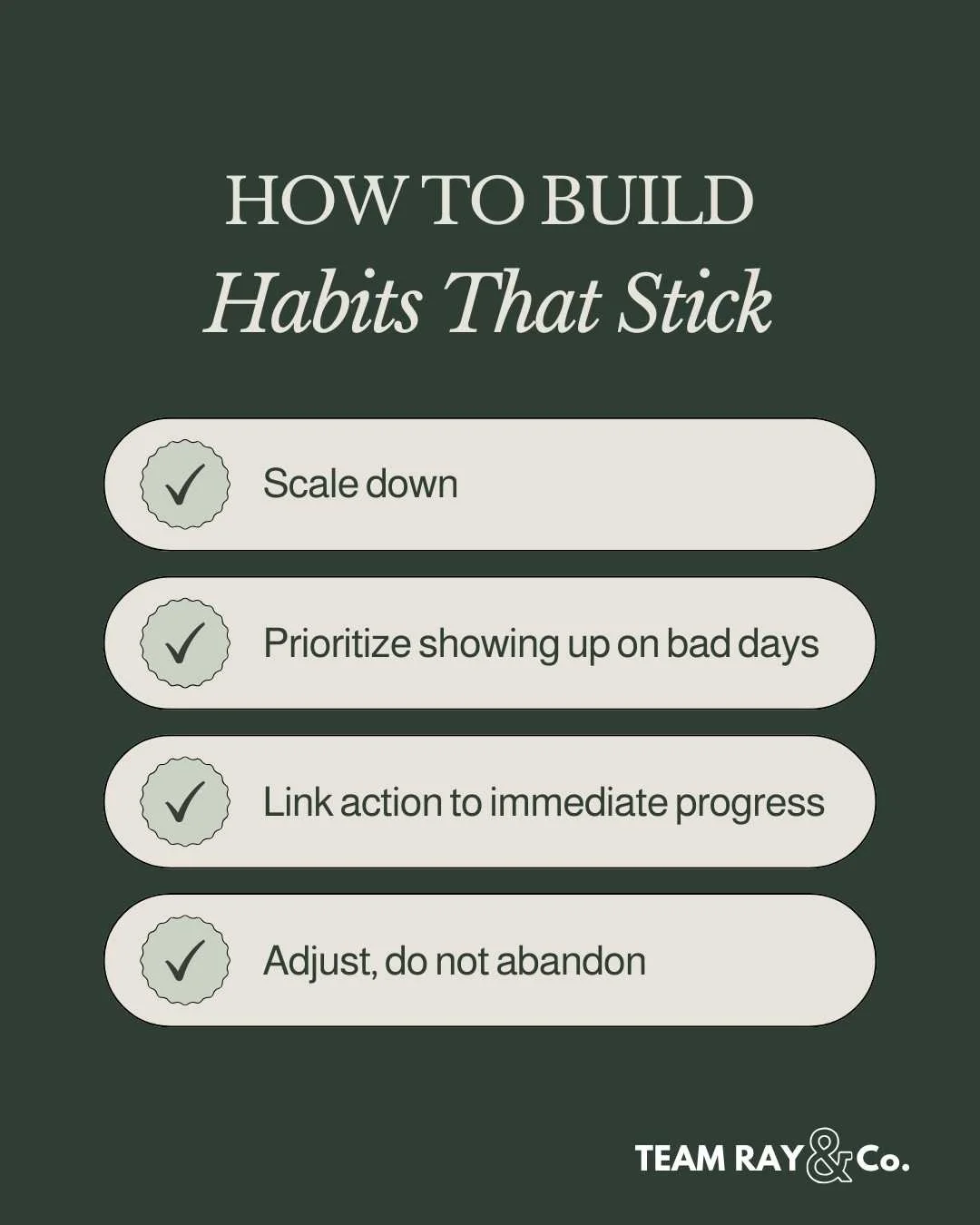
Sustainable habits rely on consistency, not bursts of motivation. Consider your habits like a chemical reaction: each habit has an activation energy, the effort required to get started. The lower the activation energy, the easier it is to maintain consistency.
Tips for creating lasting habits:
Scale down: Make habits so small they are impossible to skip
Example: Instead of committing to a full hour of daily yoga, start with five minutes of stretching. Instead of trying to write an entire chapter each day, write just one paragraph.Prioritize showing up on bad days: The strength of a habit is tested when life feels busy or energy is low. Ask: “What can I stick to even on my worst day?”
Link action to immediate progress: Doing something, even minimally, creates a feeling of momentum, turning hope into evidence
Example: Five minutes of journaling, stretching, or conversation can reset your energy and moodAdjust, do not abandon: If a habit or goal feels misaligned, scale it down or tweak it rather than dropping it entirely. Consistency is the long game
Grounding Practices for the Rest of the Year
Small, intentional practices reinforce your energy, focus, and sense of calm, preparing you for meaningful growth.
Morning or evening reflection: Spend five minutes noting your priorities and intentions
Example prompt: “What one task matters most today?”Refresh your environment: Clear or organize one area that feels heavy or stagnant
Example: Tidy a workspace, rearrange a corner for reading, or add a plantMindful pauses: Take brief check-ins during the day to notice your energy and reset
Example: Step outside, stretch, or breathe deeply for a few minutesReconnect with nature: Even five minutes outdoors noticing sunlight, wind, or trees can restore grounding energy
Review and adjust habits: Observe one habit that supports you and one that does not. Adjust gently for consistency rather than perfection
Moving Forward with Stability
The second half of the year is an opportunity to grow steadily from your foundation. Reflection, intentional goal-setting, and small, consistent actions allow progress without pressure or burnout.
Strong roots, grounded routines, supportive spaces, and meaningful relationships make growth sustainable. Show up for yourself even in small ways, trust that momentum will build, and let the rest of the year unfold with clarity, confidence, and purpose.
