

Nurturing Rest: Creating Space for Renewal at Home and Within

Rest is often undervalued. Many of us move through days believing that productivity defines progress, while quiet moments are optional. Yet rest is not passive. It is an intentional practice that shapes how we feel, think, and engage with life. A home that supports rest becomes more than a backdrop, it becomes a partner, offering spaces that replenish energy, invite calm, and allow reflection.
Understanding Your Natural Rhythms
Life moves in cycles. Some days call for focus, activity, and outward attention, while others invite pause, reflection, and inward connection. Recognizing these natural rhythms allows you to align your actions with what is sustainable and supportive, creating steadiness rather than strain.
Rest is not indulgence. It is preparation, replenishment, and perspective. Pausing restores clarity and energy so that engagement can feel meaningful and intentional, rather than rushed or forced.
Your body and mind often signal the need for rest before you consciously notice it. Fatigue, tension, irritability, or distraction may appear as subtle cues. Paying attention to these signals helps prevent overwhelm and allows for smoother transitions through your day.
Signs Your Body and Mind Are Asking for Rest
Persistent fatigue: Feeling tired even after sleeping or taking breaks.
Difficulty concentrating: Struggling to focus on tasks or decisions.
Emotional tension: Feeling irritable, anxious, or easily frustrated in routine interactions.
Physical cues: Stiffness, headaches, or other bodily discomforts signaling overexertion.
Mental chatter: Racing thoughts or difficulty slowing down when you pause.
Ways to Honor Your Natural Rhythms
Schedule micro-pauses: Take short breaks throughout your day to breathe, stretch, or enjoy a quiet moment.
Align tasks with energy levels: Notice when you feel most alert or creative and plan demanding tasks during those periods.
Create gentle transitions: Move gradually from work to rest or from one task to another to prevent abrupt energy drops.
Observe without judgment: Check in with yourself regularly, noticing which moments feel heavy and which feel light.
Adjust routines seasonally: Accept that your energy may fluctuate with time of day, week, or season, and adapt expectations accordingly.
By cultivating awareness of these rhythms, you create space to respond thoughtfully instead of reacting. Over time, this practice strengthens both mental clarity and emotional resilience, allowing rest to become a natural, restorative part of your daily life.
How Your Home Supports Renewal
Our surroundings influence our energy in subtle but profound ways. A home that reflects intention, simplicity, and thoughtful functionality can become a true partner in fostering calm and replenishment. When your environment is aligned with your natural rhythms, rest and reflection become easier to access, and your mind and body feel supported.
Soft, inviting lighting: Lighting sets the tone for your space. Avoid harsh overhead lights that can feel jarring or overstimulating. Instead, embrace warm lamps, natural sunlight, or candles. The gentle glow signals your nervous system that it is safe to relax, creating an atmosphere that encourages stillness and calm focus.
Colors and textures that soothe: Choose colors and fabrics that feel comforting rather than overwhelming. Soft neutrals, muted tones, and natural textures like wood, linen, or cotton help reduce mental clutter and invite a sense of ease. Even small details like a cozy throw or a tactile cushion can create sensory cues for relaxation.
Quiet corners: Designate spaces specifically for reflection, journaling, reading, or gentle movement such as stretching or meditation. These corners serve as anchors in your day, physical reminders that rest and renewal are valued. A simple window seat, a small desk, or a floor cushion can become a consistent invitation to pause.
Clear pathways and open surfaces: A tidy, uncluttered environment allows both body and mind to move freely. When tables, counters, and floors are clear, your attention can rest on what matters rather than being pulled in multiple directions. Open spaces reduce tension and make it easier to transition into quiet, restorative moments.
Even minor adjustments can create noticeable effects. Placing a favorite chair in a sunlit corner, draping a soft blanket over it, or keeping a journal within reach transforms the space into a supportive zone. These intentional choices signal to your mind and body that it is safe to pause, rest, and regain clarity. Over time, these small, consistent cues help your home become a sanctuary where energy is replenished, focus is restored, and calm is naturally cultivated.
Practical Ways to Invite Rest at Home
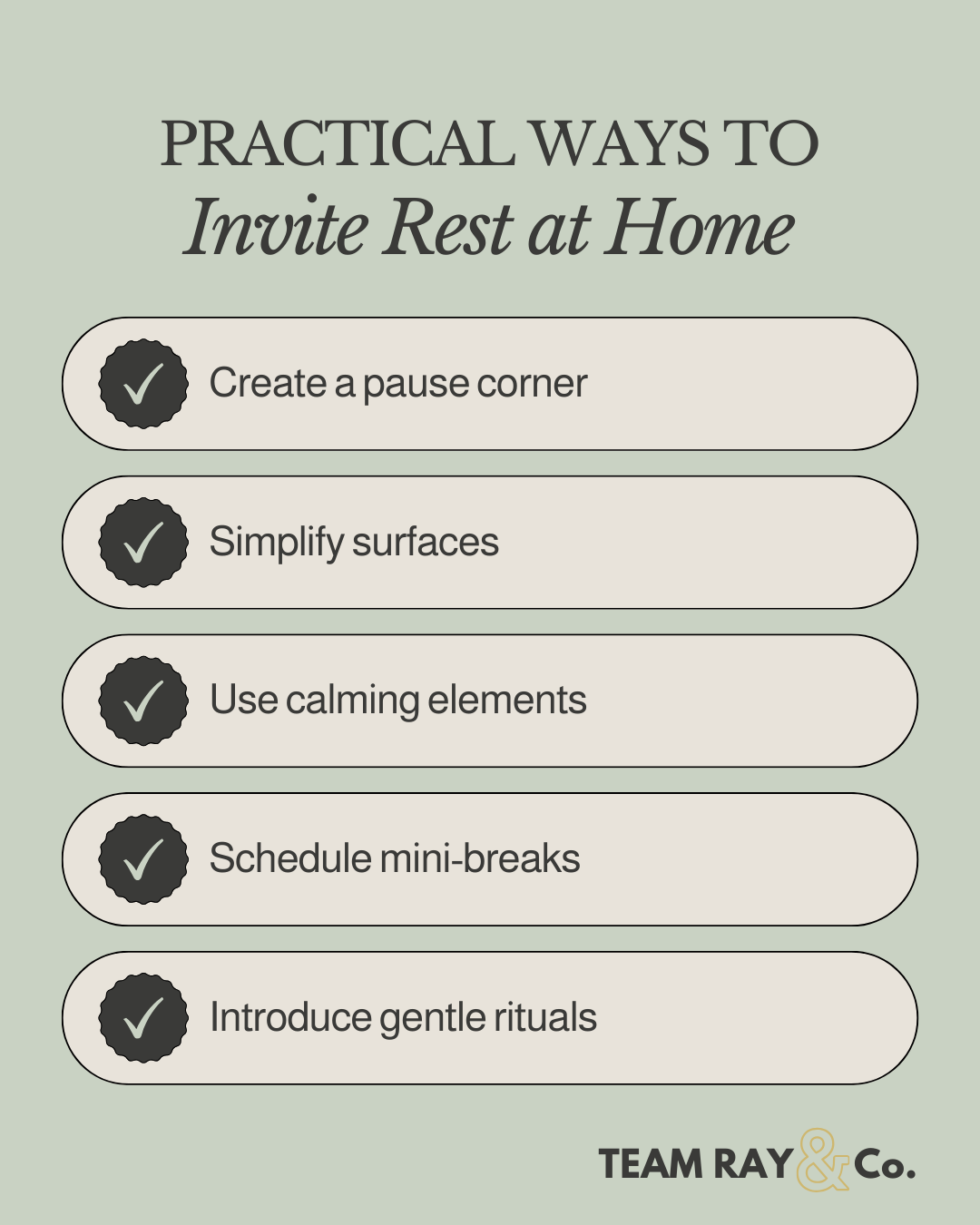
Integrating rest into daily life does not require overhauling your routine. Small, intentional actions can create sustainable calm, helping your body and mind replenish naturally.
Create a pause corner: Select a dedicated space to sit quietly, read, or journal. This corner becomes a physical cue for slowing down, signaling your nervous system that it is safe to relax. Even a small area by a window, a cozy chair, or a simple floor cushion can serve as a restorative retreat.
Simplify surfaces: Clear clutter from tables, counters, or shelves. Open, organized spaces allow the mind to breathe and reduce mental noise. A tidy environment subtly encourages focus and quiet reflection, making pauses feel more effortless.
Use calming elements: Introduce soft lighting, a small plant, gentle scents, or tactile textures like a woven throw or smooth stone. These sensory cues create an atmosphere that supports ease and comfort, reinforcing that rest is valued and expected in your daily life.
Schedule mini-breaks: Step away from work, screens, or obligations for a few minutes multiple times a day. Even brief pauses—stretching, sipping tea, or simply breathing—refresh attention and energy, preventing fatigue from accumulating unnoticed.
Introduce gentle rituals: Develop small, consistent habits that signal rest, such as slow breathing, mindful tea, journaling, or light stretching. Over time, these practices train your body and mind to recognize and welcome moments of calm as part of your natural rhythm.
By weaving these intentional actions into your day, your home becomes a partner in renewal. Each small adjustment compounds, helping energy restore, focus sharpen, and presence deepen, allowing life to feel steadier and more manageable.
Reflection and Mindfulness Practices
Observing your body, mind, and environment helps you notice where rest is most needed. Gentle, consistent reflection builds awareness and allows small adjustments to have a meaningful impact over time. Consider asking yourself:
Which areas of my home feel naturally peaceful? Notice corners, rooms, or objects that encourage calm and ease.
Where do I feel tension or restlessness, and why? Pay attention to both physical spaces and moments in your day that feel draining or rushed.
What small changes could make my daily routine calmer and more nourishing? Identify micro-adjustments, like shifting tasks to a calmer time, creating a pause corner, or simplifying surfaces.
Reflect without judgment. The goal is not to fix everything at once, but to notice patterns and create gentle interventions that support steadiness. Over time, these subtle shifts accumulate, making your home and your day feel more aligned with your energy and needs.
The Benefits of Nurtured Rest
Prioritizing rest enriches life far beyond energy levels. Consistent attention to restorative moments strengthens mental clarity, emotional resilience, and your ability to engage meaningfully with work, relationships, and personal goals.
Key benefits include:
Restores focus and decision-making ability: Clearer thinking allows more intentional actions and reduces overwhelm.
Reduces emotional tension and reactivity: Pausing replenishes emotional reserves, making interactions calmer and more measured.
Encourages choices aligned with priorities: When rested, it is easier to focus on what truly matters instead of reacting to urgency or pressure.
Builds a sense of steadiness: Regular rest creates a foundation of calm energy that carries through daily life, helping routines and responsibilities feel more manageable.
By weaving reflection and intentional rest into your routine, your home becomes a supportive partner in renewal, offering spaces and cues that nurture calm, clarity, and balance in both small moments and larger stretches of life.
A Gentle Invitation
This week, take one intentional step toward rest. Clear a surface, light a candle, or sit quietly in a favorite corner. Notice how this small action influences your energy, presence, and calm.
Through these consistent, mindful adjustments, your home becomes a true partner in renewal. Rest is not a pause from life, it is nourishment that allows you to show up fully, move through each day with ease, and cultivate clarity, balance, and gentle confidence.
