

Planning Ahead with Ease: Honoring Time and Space

Looking ahead can feel heavy. Deadlines, responsibilities, and imagined expectations crowd the mind, leaving you anxious about the months ahead. Yet planning does not need to create pressure.
Long-term thinking is not about achieving everything at once or chasing a future ideal. It is about noticing what matters most, reflecting on priorities, and aligning your energy with meaningful actions. With a gentle approach, insight can emerge naturally, helping you move forward with clarity and steadiness.
Why Long-Term Thinking Matters
Thoughtful planning, approached with calm and intention, has benefits that ripple through every area of life. It is not about perfection or control, it is about giving yourself space to see clearly and act with purpose.
Clarity: Long-term thinking helps distinguish what is essential from what can be let go. By observing patterns in your life, you can release tasks, commitments, or habits that no longer serve you. This clarity reduces mental clutter and allows your focus to settle on what truly matters.
Confidence: When you take time to plan ahead, uncertainty feels less intimidating. Knowing you have considered priorities, resources, and timing builds inner confidence, even if circumstances shift. You can navigate the future with steadiness instead of constant worry.
Focus: Aligning daily actions with long-term priorities makes decisions easier. Instead of reacting to every demand or distraction, you can choose activities that contribute to meaningful goals and values. This focus preserves energy and prevents burnout.
Emotional Ease: Thoughtful planning softens the pressure of immediate demands. When you have a sense of what is coming, you are less likely to feel rushed, reactive, or scattered. Emotional tension diminishes when there is structure without rigidity.
Preparedness: Long-term thinking allows you to respond rather than react. Anticipating challenges and opportunities gives space to adapt gracefully. You can plan for contingencies without panic and seize possibilities when they align with your capacity and priorities.
These benefits deepen when planning is consistent, reflective, and aligned with your natural rhythm. Over time, long-term thinking shifts from being a task to a practice—a gentle way of guiding your choices, honoring your energy, and moving through life with clarity and calm.
What Thoughtful Long-Term Thinking Looks Like
Long-term thinking is not about rigid schedules, perfect plans, or fixed goals. It is a practice of noticing, observing, and responding with intention over time. When approached gently, it becomes a source of insight and calm rather than stress.
Observing patterns: Pay attention to habits, energy rhythms, and recurring challenges. Notice when certain tasks drain or uplift you, which routines support your wellbeing, and where your attention naturally flows. These observations help you understand what to prioritize and where adjustments may be needed.
Staying flexible: Life changes, and so do priorities. Goals that felt urgent last month may now feel less important, while new possibilities may emerge. Thoughtful long-term thinking is adaptive, allowing plans and intentions to shift with your energy and circumstances, without guilt or self-judgment.
Mindful attention: Approach planning with curiosity instead of pressure. Rather than asking yourself what you “must” do, consider what feels meaningful, aligned, and achievable. This mindful stance helps you notice opportunities and challenges with clarity, without being overwhelmed.
Aligning with values: Decisions grounded in your core values create steadiness. Consider what supports your wellbeing, relationships, and growth. Let your choices reflect what is sustaining rather than simply reactive or externally imposed.
Balancing reflection with action: Thoughtful long-term thinking combines noticing with small, deliberate steps. Reflection alone is not enough—periodically translating insight into manageable actions ensures that planning becomes practical, not abstract.
By cultivating these qualities, long-term thinking transforms from a source of pressure into a practice of insight, calm, and clarity. It allows you to move through time with steadiness, to see patterns clearly, and to align actions with what truly matters.
How Your Home Can Support Reflection and Long-Term Thinking
The spaces around us quietly shape how we think, focus, and reflect. A home that nurtures calm and intention makes long-term thinking feel natural rather than forced. Thoughtful arrangement and small environmental details can transform even a busy household into a supportive space for insight.
Create dedicated reflective corners: Choose a spot that invites stillness—a window seat with a soft cushion, a small desk by natural light, or even a quiet floor corner. These areas become a signal to your mind that this is a space for thought and gentle planning.
Keep surfaces clear: Cluttered counters, tables, or shelves can mirror mental noise. By clearing surfaces, even small ones, you allow thoughts to flow more freely. A tidy desk or side table encourages focus and reduces distraction, making reflection easier.
Use intentional lighting: Lighting shapes mood and attention. Soft, warm lamps, candles, or natural sunlight help the mind settle. Bright overhead lights can feel stimulating, while carefully chosen lamps or window light invite a slower, more reflective pace.
Have tools within reach: Keep journals, notebooks, sketchpads, or even a favorite pen nearby. Having these items accessible removes friction when inspiration strikes, so ideas can be captured effortlessly without pressure.
Incorporate gentle sensory cues: A cozy blanket, a small plant, or soothing textures can signal comfort and support calm. Subtle scents, like a lightly scented candle or essential oil, can enhance presence without overwhelming the senses.
When your home is arranged to support reflection, it becomes more than a backdrop—it becomes a partner in your thinking process. Calm, intentional spaces allow ideas to surface naturally, help you notice patterns, and provide the mental clarity needed to plan ahead thoughtfully.
How to Approach Planning Ahead: Step-by-Step
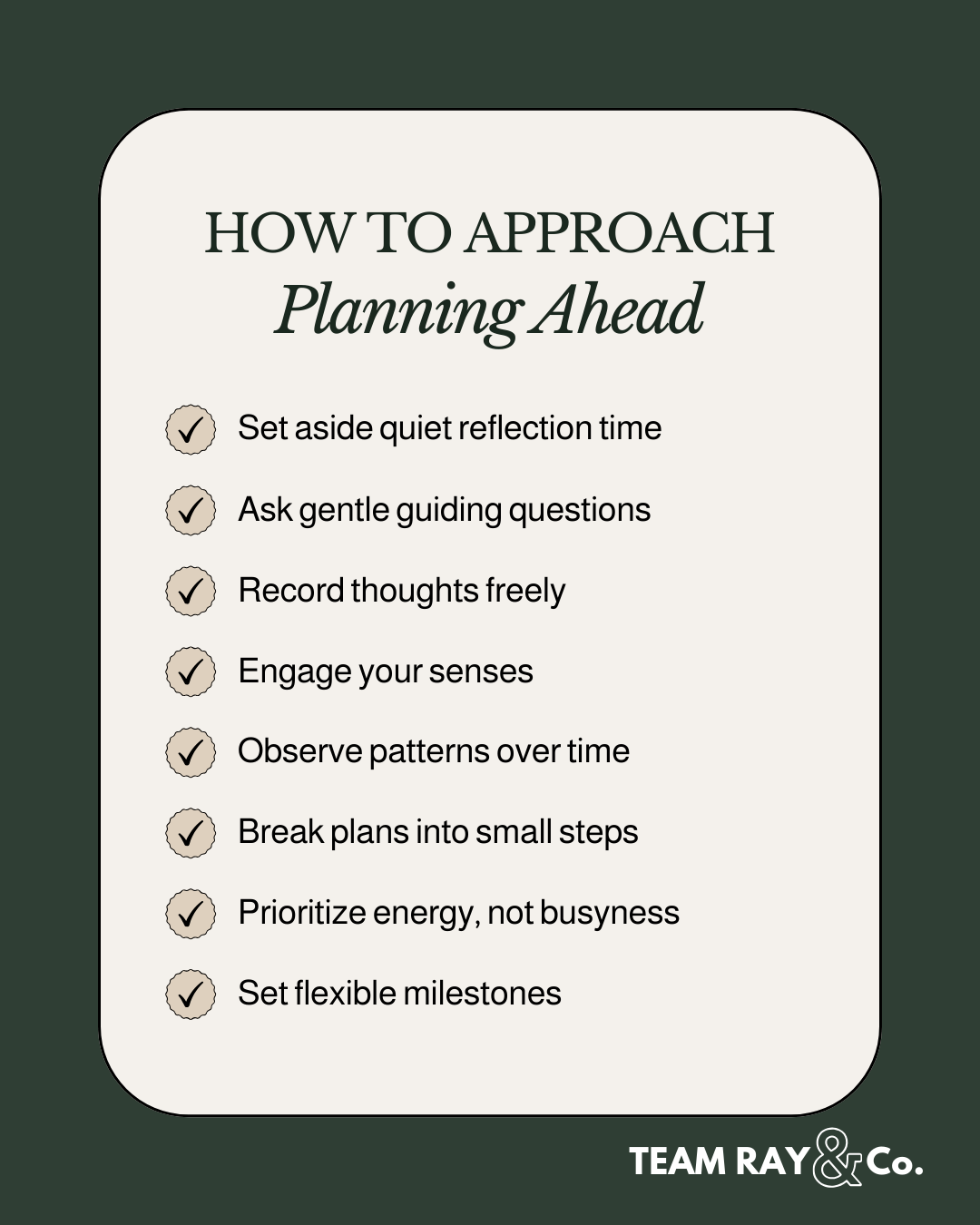
Practical, actionable steps make long-term thinking calm and manageable:
Set aside quiet reflection time: Choose weekly or monthly moments to observe your life and priorities.
Ask gentle guiding questions:
What matters most in the coming months?
Which commitments align with my energy?
Where can I let go of tasks or expectations that no longer serve me?
Record thoughts freely: Journals, sticky notes, or digital tools help capture ideas without editing or judgment.
Engage your senses: Brew tea, light a candle, or sit in natural light to anchor reflection in calm.
Observe patterns over time: Revisit your notes to see which ideas remain meaningful and which shift naturally.
Break plans into small steps: Focus on one area at a time—work, personal life, or creative projects.
Prioritize energy, not busyness: Align actions with capacity and values rather than simply filling time.
Set flexible milestones: Checkpoints allow adjustments without pressure.
These steps transform long-term thinking from an overwhelming task into a sustainable, supportive practice.
Reflection and Patience: Letting Insight Emerge
Planning ahead is not about instant decisions. It is about awareness, observing your capacity, and recognizing where energy naturally flows. Insights often appear gradually, guiding thoughtful action rather than reaction.
Even small, intentional moments create momentum. When your time, energy, and priorities are honored, planning ahead becomes a source of calm, not stress. Each step feels deliberate, aligned, and manageable.
Gentle Reminder: Planning as a Practice
You do not need to have it all figured out. Long-term thinking is a practice of noticing, reflecting, and allowing insight to arrive on its own. By honoring your time and space, you build clarity, confidence, and calm.
Planning ahead is less about perfect schedules and more about creating alignment with your life. Each thoughtful step adds steadiness, focus, and a sense of ease, helping you move forward with calm, confidence, and intention.
