

Preventing Burnout: From Overwhelm to Balance

Are You on the Brink of Burnout? Here’s How to Regain Balance
The to-do list never ends. Even after a full day of work, caregiving, or managing a household, there’s always something left unfinished. You push through, telling yourself that once things slow down, you’ll rest. Sometimes the break never comes. Over time, this constant pace quietly drains energy, leaving you tense, unfocused, or disconnected from the things that matter most.
Preventing burnout isn’t simply about reducing stress. It’s about creating a way of living and working that feels sustainable, where your energy and focus are respected, and where your days carry a sense of steadiness. Burnout doesn’t appear suddenly. It grows slowly, often in ways that feel almost normal until it becomes overwhelming. The good news is that with attention and intention, you can notice the early signs and make choices that restore energy, clarity, and calm.
Recognizing the Signs of Burnout
Burnout goes beyond simple fatigue. It impacts your body, mind, and emotions in ways that can quietly erode your resilience. Look for these common signals:
Persistent fatigue – You wake up tired, as if you never fully rested.
Irritability and frustration – Small tasks feel impossible, patience wears thin, and tension lingers longer than usual.
Loss of motivation – Activities that once brought enjoyment now feel like chores or obligations.
Difficulty focusing – Concentration falters, details slip through, and even simple decisions feel taxing.
Pause for a moment to notice which of these resonate with you. Observing these patterns is not about judgment. It’s about awareness. Awareness is the first step toward reclaiming your energy before burnout takes hold.
Why Burnout Happens
Burnout isn’t simply about working too much. It develops when sustained stress meets limited recovery. Some of the most common contributing factors include:
Overcommitment – Taking on more responsibilities than you realistically have energy for.
Lack of boundaries – Feeling obligated to say yes even when your schedule or capacity is already full.
Perfectionism – Holding yourself to high or unrealistic standards, making every task feel heavier than it needs to be.
Neglecting self-care – Consistently prioritizing everyone else’s needs over your own.
Understanding these triggers helps you respond thoughtfully rather than reactively. When you recognize what tends to push you toward burnout, you can begin to make deliberate changes that preserve your energy and maintain clarity.
How to Find Balance When Life Feels Overwhelming
When life feels like a constant push forward, it’s easy to wonder if balance is even possible. The truth is, it is, but it doesn’t happen all at once. Even small, intentional changes can have a meaningful impact on how your days feel, how your energy holds up, and how capable you feel in managing responsibilities.
Here are practical ways to begin:
Prioritize and delegate – Take a look at your tasks and responsibilities. Not everything demands your immediate attention. Decide what truly matters and what can wait or be shared with others. Letting go of unnecessary pressure frees mental and emotional space.
Set clear boundaries – Saying no isn’t selfish. It is an act of self-respect. When you define what you can and cannot take on, you protect your time and energy, creating space to recover and focus on what matters most.
Take micro-breaks – Even a few minutes of pause can reset your nervous system. Step outside for fresh air, stretch, or practice deep breathing. These small pauses prevent tension from building and help you approach tasks with renewed focus.
Reframe productivity – Productivity is not about checking every box on your list. It’s about spending time and energy on what aligns with your values, priorities, and well-being. Choosing thoughtful action over endless busyness creates calm and satisfaction.
Preventing burnout is not about eliminating stress entirely. Stress is part of life, and trying to escape it only creates more pressure. Balance comes from building routines, honoring boundaries, and practicing habits that allow you to rest, recover, and recharge. Small, steady adjustments each day gradually shift your life toward energy, presence, and focus that lasts.
How to Build a Sustainable Routine
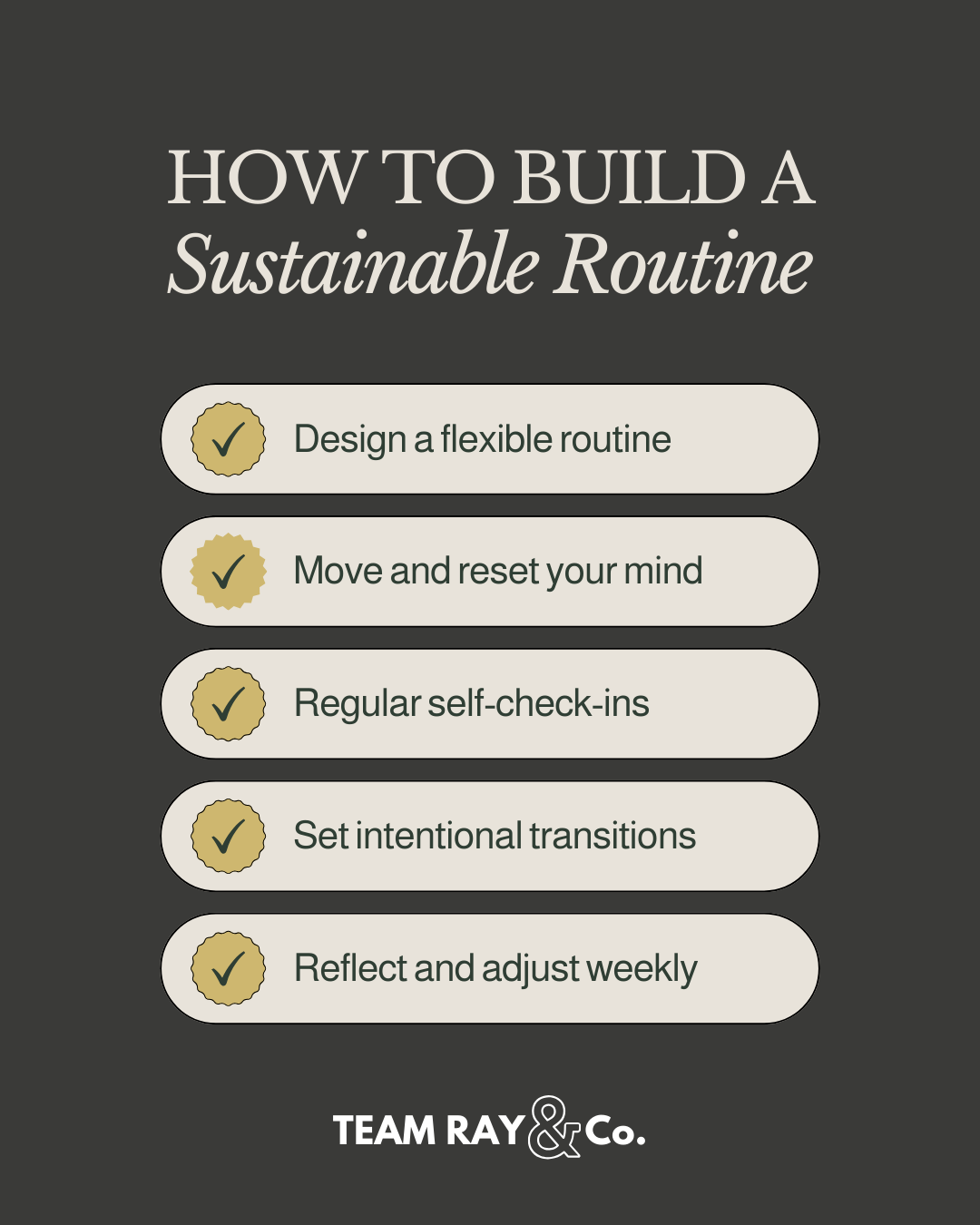
Balance is not something you find once, it is something you create, day by day. A thoughtful routine doesn’t confine you; it supports your energy, focus, and emotional well-being, while leaving space for flexibility and spontaneity.
Here are practical steps to begin:
Design a flexible routine – Structure your day in blocks for work, rest, and connection, but allow room to adjust. Flexibility prevents pressure when unexpected tasks or changes arise.
Move and reset your mind – Gentle movement, stretching, or a short walk can refresh energy. Simple mindfulness practices, like deep breathing or journaling, help anchor focus and bring clarity to your day.
Check in with yourself regularly – Pause at moments throughout the day and ask: How am I feeling? What do I need right now? Listening to your body and mind keeps choices aligned with your energy and priorities.
Set intentional transitions – Shift smoothly between work and personal time with small rituals. Tidy your workspace, step outside for a few minutes, or play calming music. These cues help signal your brain to move from one mode to another.
Reflect and adjust weekly – Take time to notice which routines support your energy and which create friction. Even minor changes can prevent the slow buildup of overwhelm and maintain a sense of control and calm.
A sustainable routine is not about rigidity or perfection. It is a framework that honors your needs, giving each day structure without pressure. Over time, these small, intentional practices help your days feel more manageable, steady, and aligned with your life and priorities.
Take a moment today to pause and reflect: What is one step I can take toward balance? Even small adjustments can lead to a healthier, more sustainable way of living.
If this resonates with you, share your thoughts in the comments. How do you prevent burnout in your daily life?
