

Mental Clutter: Spring Cleaning for Your Soul

Understanding and Clearing Mental Clutter to Feel Lighter and More Focused
Spring often invites us to create space. Many of us focus on tidying our homes, yet the space inside our minds often goes unnoticed. Mental clutter, including racing thoughts, unfinished tasks, worries, and emotional baggage, can make it hard to focus, rest, or feel grounded. Clearing it can leave you feeling lighter, calmer, and more present.
What Is Mental Clutter
Mental clutter includes thoughts, worries, and distractions that take up space in your mind without serving you. Common forms include
Unfinished tasks – Projects or chores that remain on your to-do list, quietly pulling at your attention.
Overcommitment – Agreeing to too many obligations, leaving little room for reflection or rest.
Negative self-talk – Repeated critical or limiting thoughts about yourself.
Emotional baggage – Resentments, regrets, or unresolved feelings from past experiences.
Digital overload – Constant notifications, messages, and social media updates that fragment focus.
Noticing what fills your mind is the first step toward letting it go.
Why Mental Clutter Matters
Holding onto too much in your mind can affect your well-being in ways that are not always obvious. You may notice
Decisions become harder as too many thoughts cloud judgment
Stress and anxiety rise as racing thoughts keep the body tense
Motivation fades under the weight of unfinished tasks
Presence diminishes, making it difficult to enjoy simple moments
Understanding these effects can encourage gentle and intentional action.
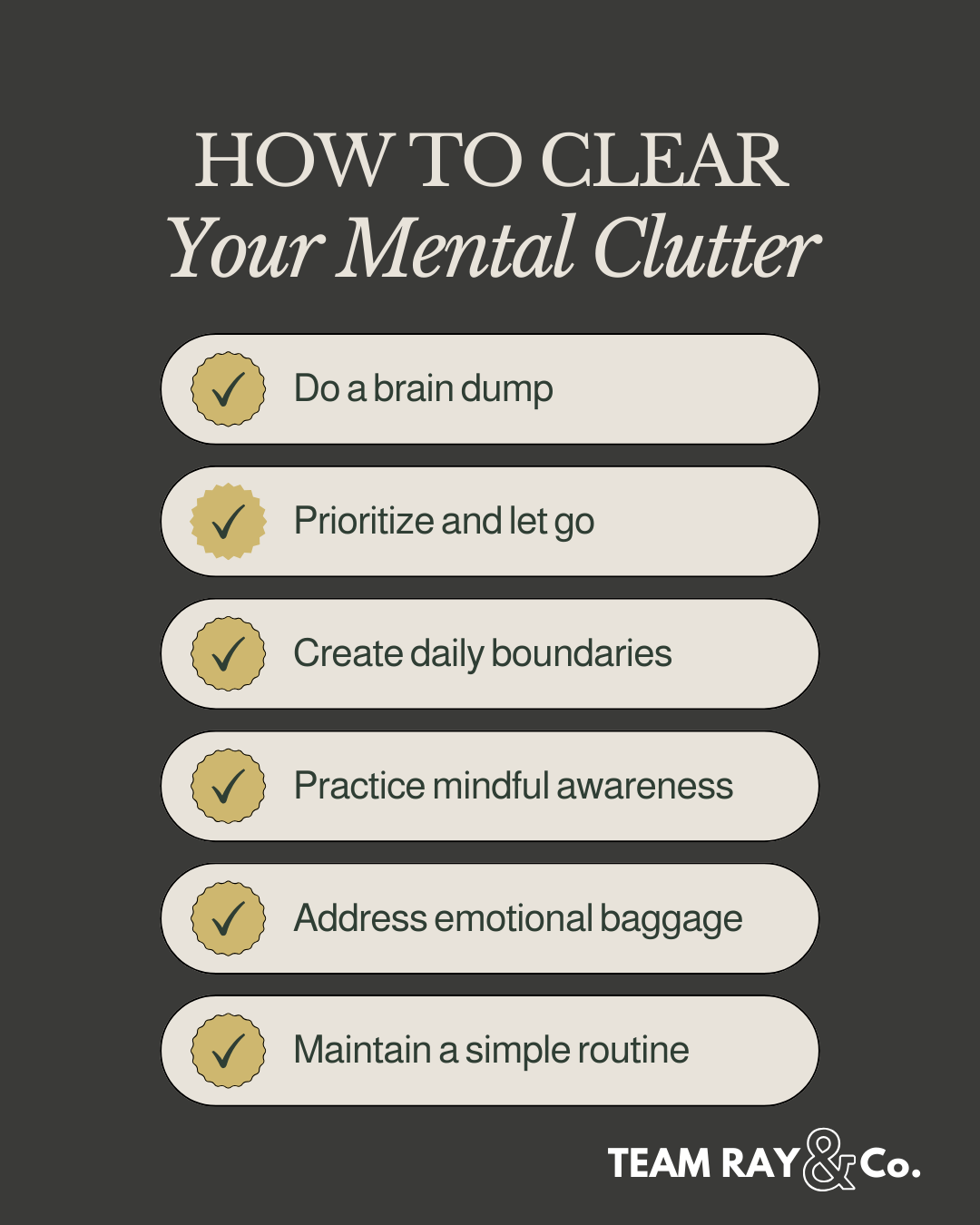
How to Clear Your Mental Clutter
Clearing mental clutter is about creating small, consistent habits that give your mind space. It is not about completing everything at once or forcing your thoughts into order. It is about noticing what occupies your mind and taking gentle steps to release what no longer serves you. Here are practical ways to begin.
1. Do a Brain Dump
Start by emptying your mind onto paper or a digital note. Writing everything down helps you see what is occupying space and gives your thoughts room to breathe. Include all tasks, worries, and random ideas, nothing is too small to note.
Write down every thought, task, or worry on a piece of paper or in a digital note
Include everything, even small or random items
Seeing thoughts outside your head can provide immediate relief
2. Prioritize and Let Go
After your brain dump, take a gentle look at your list. Decide which items truly need your attention and which can wait or be released. Letting go is not about laziness; it is about freeing energy for what matters most.
Review your list and identify what truly matters
Ask yourself whether a task or thought needs attention now
Release what can wait or does not serve you
3. Create Daily Boundaries
Mental clutter often builds when your attention is pulled in too many directions. Boundaries give your mind space to rest. They are small acts of self-care that help you protect your energy and focus.
Limit social media or email checks to specific times
Allow periods of quiet or solitude to let your mind rest
Say no to commitments that stretch you too thin
4. Practice Mindful Awareness
Mindfulness helps you notice mental clutter without judgment. When your thoughts wander to worries or regrets, gently return your attention to the present. Over time, this practice reduces mental noise and brings a sense of calm.
Notice when your thoughts drift to worries or regrets
Gently bring your attention to your breath, surroundings, or a single task
Regular moments of mindfulness reduce mental noise over time
5. Address Emotional Baggage
Unresolved feelings and past regrets take up more space than we realize. Facing these emotions gently and thoughtfully allows you to release them and create room for calm and focus.
Journaling can help process unresolved feelings
Forgiving yourself or others releases mental weight
Talking with a trusted friend or counselor provides perspective and relief
6. Maintain a Simple Routine
A consistent routine supports mental clarity. It helps your mind feel stable and rested. Gentle rhythms throughout the day reduce overwhelm and make it easier to stay present.
Start your day with a calm ritual such as tea, journaling, or stretching
Break work into focused periods with short rests in between
End your day with reflection, noting what you accomplished and what can wait
Building Long-Term Mental Clarity
Mental clutter is ongoing. Gentle habits can help keep your mind clear
Review and update your mental tasks regularly
Celebrate small releases, remembering that letting go is a process
Protect rest and self-care as essentials for clarity and focus
A Gentle Step to Take Today
Notice one thought, task, or worry you can release. Even a single small step shifts your mind toward clarity and calm. Over time, these small moments accumulate, giving your mind the freedom to focus on what truly matters.
