

Finding Rhythm Beneath the Surface: Emotional Flow and Inner Balance

Life flows in rhythms, just like the ocean. Some days are calm, others feel turbulent. Your energy rises and falls, and your emotions ebb and swell naturally. Just as the ocean continues its tides regardless of the waves that crash on the shore, your inner world keeps moving, even when it feels unpredictable.
The key is noticing your personal rhythm and learning to move with it. By observing rather than resisting, you can respond to challenges with steadiness, create balance in daily life, and align your routines with your natural energy.
Observing Your Inner Tides
Every person experiences highs and lows, and these are completely normal. A day that feels heavy may be followed by a burst of clarity or creativity. Recognizing these patterns allows you to plan your life around them instead of against them.
Think of your inner tides as the ocean itself: neutral, powerful, and ongoing. Your perception of them often depends on what you are experiencing in that moment. Some days, you may feel gratitude for your energy; other days, you may feel frustrated by fatigue. Neither is “wrong”—they simply reflect your current state.
Reflection Prompt:
Observe today’s emotional or energy patterns. Where did you feel lifted? Where did you feel drained?
How the Environment Shapes Emotional Flow
Just as the ocean responds to the winds and weather around it, your surroundings influence your inner tides. Spaces that feel cluttered, noisy, or chaotic can amplify tension, making it harder to focus, rest, or process emotions. Calm, intentional environments help your nervous system settle, support emotional steadiness, and create a sense of ease.
Practical ways to align your surroundings with your inner flow include:
Open light and air: Let sunlight stream in or open a window for fresh air. Natural light can lift mood and boost alertness, while airflow helps refresh your mental space. Even a few minutes of sunlight on your face can reset your energy.
Clear a small surface: Remove items that pull your attention, such as a messy countertop, a cluttered desk, or an overflowing shelf. Start with one surface at a time, like a nightstand or kitchen counter, so the process feels manageable rather than overwhelming.
Create intentional corners: Designate a quiet spot for reflection, reading, or mindful pause. A small chair with a soft throw, a candle, or a plant can transform an overlooked corner into a sanctuary for mental clarity.
Incorporate sensory cues: Subtle changes like a diffuser with a calming scent, soft music, or a tactile object like a journal or smooth stone can help signal to your body that this space is for grounding and emotional restoration.
Observe and adjust: Start small and notice which areas of your home or workspace feel heavy, draining, or overstimulating. Gently rearrange, remove, or replace items that contribute to tension. Over time, these micro-changes ripple into greater calm, focus, and resilience.
Routine micro-resets: Pair environmental shifts with small daily rituals. Five minutes of tidying before breakfast, a quick breath or stretch at your desk, or sitting quietly with a cup of tea in your intentional corner can reinforce both physical and emotional alignment.
By treating your home and workspace as partners in emotional regulation, you create a steady foundation for mindfulness, energy management, and emotional flow—one small, intentional adjustment at a time.
Lessons from the Ocean
The ocean can be a metaphor for how we experience life. People perceive it differently depending on what happens to them:
One person might feel loss, writing off the ocean as harsh or dangerous.
Another might experience abundance and see it as generous.
A child might feel playful frustration.
Someone else might discover unexpected treasure, seeing the ocean as kind and giving.
Just like the ocean, your experiences are shaped by perspective. Others’ judgments or opinions often reflect their needs and expectations, not your reality. Learning to rise above these external perceptions is key to emotional steadiness.
Reflection Prompt:
Which emotional “waves” today are influenced by your expectations, and which are simply part of your natural rhythm?
Aligning Environment and Habits to Support Emotional Flow
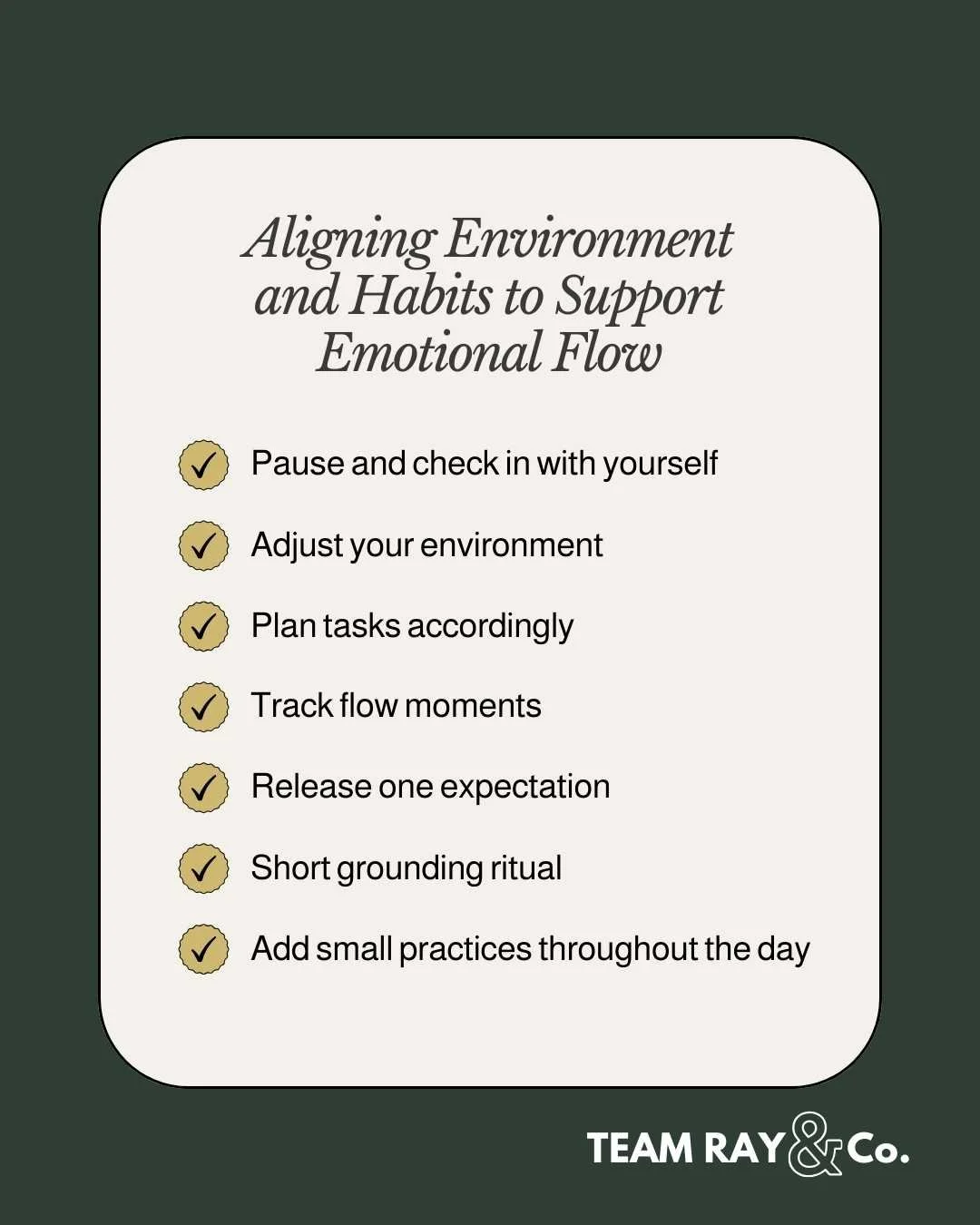
Honoring your emotional tides means noticing how your energy rises and falls, and responding thoughtfully instead of reacting automatically. These practices help you align with your natural rhythm and create a sense of steadiness throughout the day:
Pause and check in with yourself: Take a few deep breaths, close your eyes, and notice your energy, mood, and physical sensations without judgment. Ask yourself simple questions: “How am I feeling right now?” or “What do I need in this moment?” Even a 60-second pause can reset tension and clarify priorities.
Adjust your environment: Small changes in your surroundings can shift emotional flow. Clear one surface that draws your attention, open a window for fresh air, or create a small corner for calm. This could be a desk cleared of clutter, a cozy chair with a journal, or a spot near sunlight to recharge your energy.
Plan tasks according to your peaks and lulls: Notice when your focus, creativity, or patience is at its highest, and schedule demanding tasks for those periods. Likewise, allow rest or low-effort activities when your energy dips. For example, handle emails in the afternoon if mornings are best for deep work, or take a short walk during mid-day fatigue.
Track flow moments: Keep a mental note or journal of times when you felt aligned and productive versus out of rhythm or drained. Over time, you’ll see patterns that can guide how you structure your day, helping you replicate the conditions that support your inner flow.
Release one expectation: Choose one task, obligation, or pressure that doesn’t serve your current energy or priorities, and let it go. Even small acts of letting go can reduce stress, create mental clarity, and free up energy for what truly matters.
Short grounding ritual: Spend three to five minutes practicing mindful breathing, gentle stretching, or simply noticing your surroundings. For instance, stand by a window, feel the air on your skin, and name three things you see, hear, or feel. This can help you reconnect to the present and recalibrate before continuing your day.
Integrate micro-practices throughout your day: Tiny, repeated actions compound into lasting benefits. Sip water mindfully, take a few slow steps between tasks, or pause before responding to messages. These small moments reinforce awareness and help you stay attuned to your internal rhythms.
Even small, consistent steps like these cultivate resilience, reduce reactive stress, and help you navigate emotional ups and downs with greater ease and grace. Over time, honoring your inner flow becomes not just a practice, but a sustainable way of living.
Conclusion: Moving With Calm and Steadiness
Just as the ocean flows with immense power yet maintains rhythm, you can cultivate steadiness in your own life. Emotional flow is natural, and balance comes from observing, responding, and aligning gently with your internal tides.
Small, intentional actions like pausing, adjusting your environment, honoring your peaks and lulls can create lasting calm and inner balance. By moving with your rhythm rather than against it, you create a life that is both resilient and joyful, no matter what waves arise.
