

Earth Day 2026: Sustainable Living Starts at Home
If you’re reading this, something likely moved you.
Maybe it was a documentary.
A fact or statistic you couldn’t ignore.
A conversation about climate change.
Or simply the quiet realization that your daily habits could be more intentional.
That spark matters.
But here’s what often happens next: motivation turns into overwhelm.
You start researching sustainable living and suddenly feel like you need to:
Eliminate all plastic
Grow your own food
Redesign your entire lifestyle
Get everything perfect
That’s where most people stall.
Let’s simplify this.
Sustainable living does not start with perfection. It starts with one system in your home.
Step One: Choose Your Starting Point
Do not try to change everything at once.
Instead, choose one area of impact:
Energy
Waste
Food
Consumption
Pick the one that feels most manageable right now. That is your starting point.
If You Start with Energy
Energy changes are often the easiest and most immediate.
This week, you could:
Replace bulbs in one room with LED
Unplug devices that are constantly drawing power, like TVs, chargers, and coffee machines
Use natural light during the day before switching on lights
Wash clothes in cold water
Air-dry one load of laundry
You do not need solar panels to begin. You need awareness and consistency.
If You Start with Waste
Most households notice waste first in the kitchen.
Try one of these:
Keep a small container for food scraps and explore composting options nearby
Replace paper towels with reusable cloths
Carry a reusable water bottle and grocery bag consistently
Do a three-day “waste audit” — simply observe what you throw away
The goal is not zero waste overnight. It is reducing unnecessary waste step by step.
If You Start with Food
Food choices affect both the environment and your budget.
You could:
Plan meals before grocery shopping to reduce waste
Introduce one plant-based meal per week
Store produce properly so it lasts longer
Freeze leftovers instead of letting them expire
Shop your pantry before buying more
Sustainable food habits often save money, which makes them easier to maintain.
If You Start with Consumption
This is where long-term impact builds.
Before buying something new, ask yourself:
Do I really need this?
Can I borrow it?
Can I repair something I already own?
Will I still value this in six months?
You can also:
Declutter and donate items you no longer use
Choose higher-quality items that last longer
Buy secondhand for certain categories like books, furniture, or children’s clothes
Sustainable living is less about buying “eco” products and more about buying less overall.
Avoid These Common Mistakes
When people first commit to sustainability, they often:
Try to change five habits at once
Spend money replacing everything with “green” alternatives
Quit when it feels inconvenient
Compare themselves to people much further along
Instead:
Change one habit
Track it for 30 days
Then add another
Sustainability works best when it becomes routine, not when it depends on motivation.
A Simple 30-Day Starter Plan for Sustainable Living
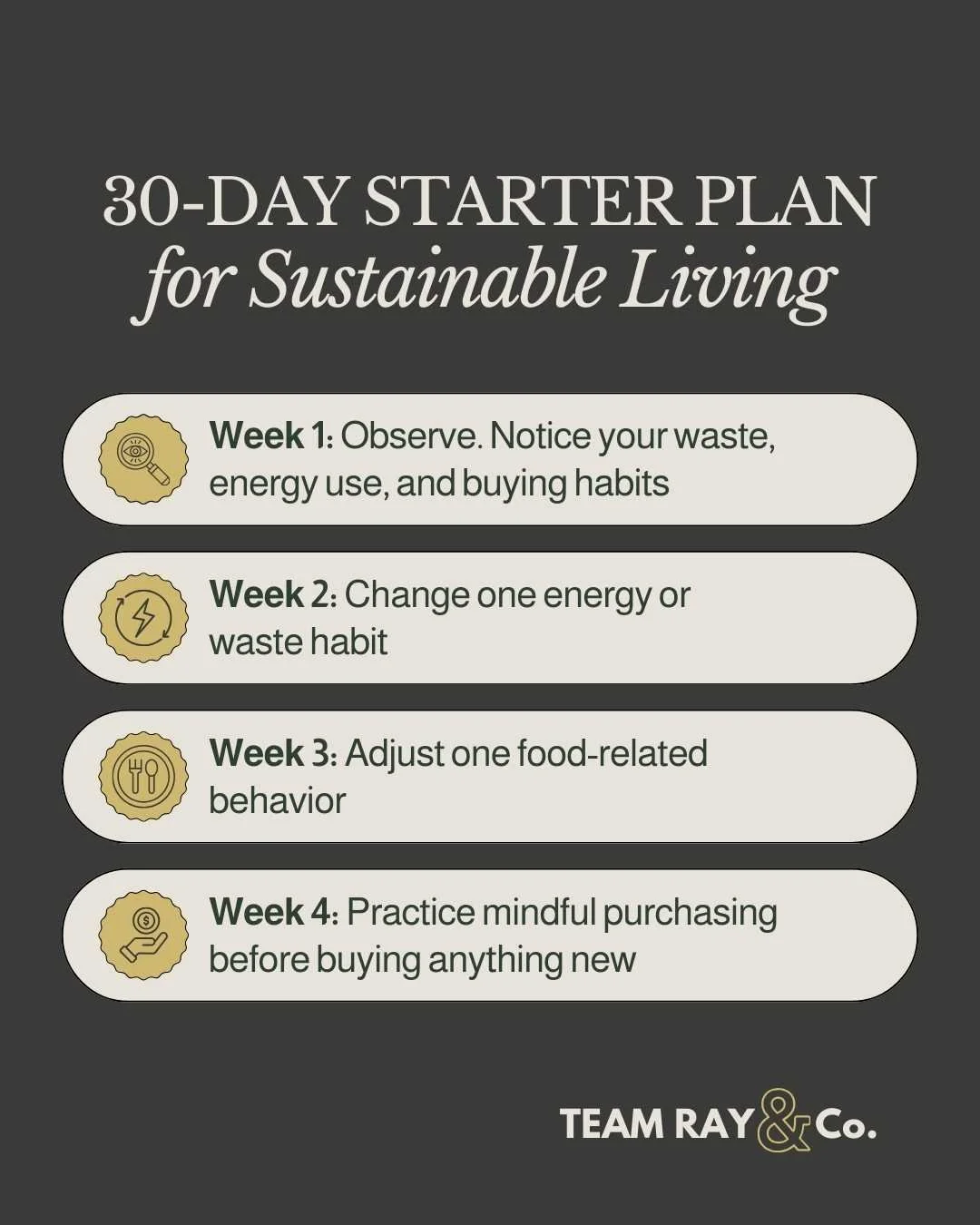
Week 1: Observe. Notice your waste, energy use, and buying habits
Week 2: Change one energy or waste habit
Week 3: Adjust one food-related behavior
Week 4: Practice mindful purchasing before buying anything new
Four small changes in a month are powerful and realistic.
Why Starting at Home Works
Your home is where your habits live.
It is where:
Lights are turned on
Groceries are unpacked
Packages arrive
Laundry runs
Trash fills up
You already have control here. You do not need to wait for policy changes or global agreements to begin living more consciously. Your daily decisions matter because they compound.
Sustainable living is not about being extreme. It is about aligning your habits with your values in ways you can maintain long-term.
The Goal Is Momentum, Not Perfection
If you strengthen your resolve this Earth Day, protect it.
Do not overwhelm it.
Choose one starting point. Make one practical adjustment. Build confidence through consistency.
A year from now, you will not remember the documentary that inspired you. But you will be living differently because you began simply at home.
That is how sustainable living becomes sustainable for you.
