

Living Within Your Capacity: How to Find Balance in Life

There’s a common misconception that being calm means being detached or emotionless. In truth, calm is not about suppressing feelings. It is about learning to step back, notice your thoughts, recognize your emotions, and take the time to respond with intention.
Living within your capacity creates the space to do this. It allows you to pause instead of reacting, to consider the bigger picture, and to make choices that feel aligned rather than pressured. Calm becomes less about control and more about presence.
Understanding Your Capacity
Capacity is simply the amount you can comfortably hold at this moment; your energy, mental focus, and emotional bandwidth. It is not fixed. Some days, weeks, or seasons invite expansion and new opportunities. Other times, rest and simplicity are needed.
Understanding your capacity allows you to act with awareness instead of habitually taking on too much. It gives you permission to honor your limits without judgment, and to build a life that feels steady, manageable, and aligned.
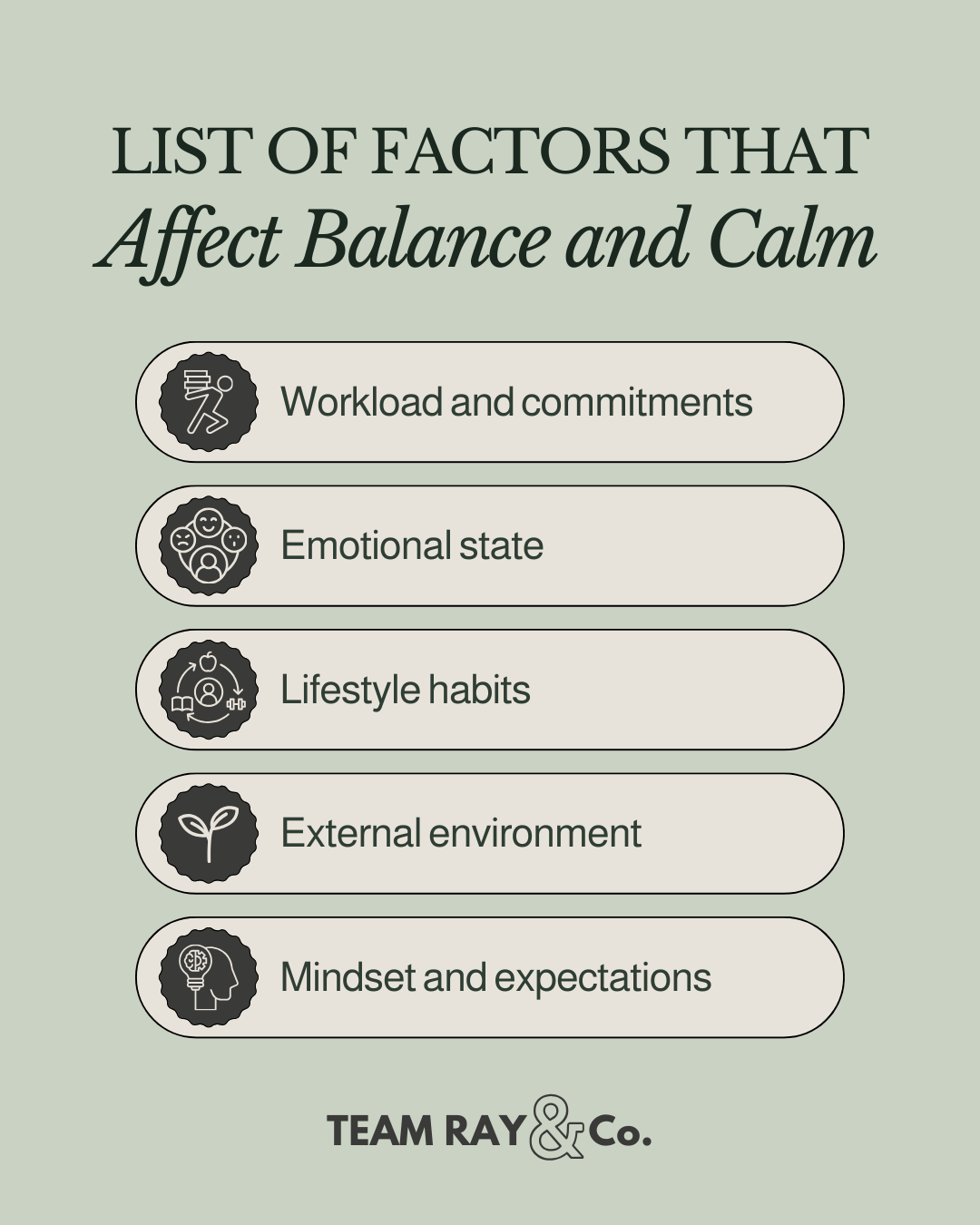
Factors That Affect Balance and Calm
Several elements influence our ability to maintain balance:
Workload and commitments: Overloading your schedule drains energy quickly.
Emotional state: Unprocessed feelings or ongoing stress make it harder to respond thoughtfully.
Lifestyle habits: Lack of sleep, inconsistent routines, or poor nutrition can reduce resilience.
External environment: Chaos, noise, or constant interruptions create tension.
Mindset and expectations: Comparing yourself to others or striving for perfection adds unnecessary pressure.
Recognizing these factors helps you respond with care rather than force, creating space for steadiness and clarity.
Recognizing Signs You’re Overextended
It can be easy to overlook when you’re stretching beyond your limits, but your body and mind often give quiet signals. Paying attention helps you act before overwhelm takes hold. Look for signs like:
Persistent mental fatigue: Even simple tasks feel taxing or require more effort than usual.
Emotional tension: Feeling irritable, anxious, or reactive more often than feels normal.
Difficulty focusing: Thoughts jump from one task to another, making it hard to complete anything fully.
Physical cues: Muscle tightness, headaches, or trouble sleeping can indicate your energy is overextended.
Reduced enjoyment: Activities that normally bring satisfaction or rest feel heavy or draining.
Overcommitment: Constantly saying yes to tasks or obligations, even when you’re already full.
Recognizing these patterns is not about judgment. It is a gentle act of noticing your limits so you can respond with care rather than push further.
How to Live Within Your Capacity
Here are practical ways to honor your energy and create calm:
Assess Your Energy and Commitments
Review your daily tasks and obligations. Identify what supports you and what drains you. Focus on actions that feel meaningful, and release those that no longer serve your current season.Simplify Routines
Adjust or remove steps in your daily flow that feel unnecessary. Even small changes, like streamlining morning tasks or spacing out activities, can make your day feel lighter.Pause Intentionally
Schedule moments of stillness. Sit quietly, breathe deeply, or enjoy a brief break. These pauses restore focus and help you respond with clarity instead of reaction.Set Boundaries
Notice obligations or expectations that feel misaligned with your energy. Saying no is not failure, it is an act of care that protects your capacity and allows you to show up fully where it matters most.Observe and Adjust Daily Rhythms
Pay attention to heavy and light moments throughout your day. Shift tasks, slow down, or ask for support when needed. Small adjustments accumulate into meaningful balance.
Benefits of Living Within Your Capacity
Honoring your limits creates a foundation for steadiness and ease in life. When you consistently live within your capacity, you may notice:
Enhanced clarity and focus: Decisions feel intentional, and your mind is less cluttered by stress or distraction.
Emotional resilience: You respond to challenges calmly instead of reacting impulsively, and stress feels more manageable.
Sustainable energy: Your day flows more smoothly without the constant drain of overextension.
Stronger presence: You can fully engage in work, relationships, and personal moments because you are not mentally stretched thin.
Increased satisfaction: Everyday tasks and moments feel more meaningful when they match your energy.
Improved health and wellbeing: Reducing constant strain helps support better sleep, digestion, and overall physical comfort.
Confidence in boundaries: Saying no or adjusting your schedule feels empowering rather than guilt-inducing, reinforcing your sense of control.
Living within your capacity is a quiet, steady practice that compounds over time. The benefits are subtle at first but grow into a life that feels calmer, more aligned, and deeply supportive of your wellbeing.
