

Healing Outdoors: Mental Health Benefits of Nature

Life moves quickly. Many days are filled with notifications, responsibilities, and constant mental noise. Over time, this pace can leave you feeling tense, distracted, or emotionally worn down. When that happens, the mind often needs something simple and steady rather than another solution to manage.
Nature offers that steadiness.
Spending time around plants, trees, and open spaces gives the nervous system a chance to slow down. Even brief contact with natural environments can help the mind settle and the body relax. This response is rooted in how humans have lived for most of history.
Research continues to confirm what many people already feel. Time spent in nature supports emotional balance, improves focus, and eases stress. These benefits do not require travel or major lifestyle changes. Small, consistent moments are enough to make a difference.
The Power of Green: Why Nature’s Color Makes Us Feel Good
Did you know that just looking at green can help reduce stress? It’s true. The color green, often associated with nature, has a calming effect on our minds. When you step outside and see trees, plants, or fields, it just feels good. There is actually science behind this.
Spending time in nature, whether it is a walk in the park or a weekend hike, has been shown to have a profound impact on mental well-being. Research shows that spending just 120 minutes a week in nature can improve your health and reduce stress. Nature provides relief from many of the pressures of modern life. Whether it is a stroll through the woods or taking in the view of a green space, the natural world is incredibly effective at calming nerves and boosting mood.
Time spent outside does more than lower stress. It also reduces anxiety, helps fight depression, and even improves creativity. In fact, a study found that spending four days in nature can improve problem-solving skills by 50 percent. So, if you are feeling stuck or overwhelmed, nature might be the remedy to clear your head.
Indoor plants also make a difference. A study on the effects of green plants during the pandemic found that people who had indoor plants reported feeling less stressed compared to those without them. It was not just the presence of plants. The healthier the plant, the more it helped reduce stress. Your indoor greenery does more than look pretty; it actively works to calm your mind. (Source: Effect of Green Plants on Individuals’ Mental Stress during the COVID-19 Pandemic, Tao Liu et al., 2022)
Whether it is the sight of lush greenery, the sound of rustling leaves, or the fresh air, stepping into nature, inside or outdoors, offers a mental recharge like no other. Next time you feel stressed, try stepping outside or adding a few more plants to your home. Your mind and your stress levels will thank you.
Emotional Benefits of Spending Time Outdoors
Time outside supports emotional health in quiet but noticeable ways.
Reduced stress
Natural settings help regulate the stress response. Walking outdoors, sitting near trees, or tending a garden can create a sense of calm that feels restorative.
Improved mood
People who spend time in green spaces often report feeling more emotionally steady. Natural light, fresh air, and gentle movement all contribute to this effect.
Greater focus and mental clarity
Nature helps ease mental overload. This makes it easier to stay present and concentrate, especially after long periods of screen time or decision-making.
The Added Benefit of Movement in Nature
Movement is already powerful for mental health, and combining it with time outdoors magnifies its effects. Gentle, mindful movement helps release tension in both body and mind, improves mood, and supports emotional balance.
Here’s how outdoor activity can make a difference:
Release built-up tension
Walking, stretching, gardening, or light hiking helps the body let go of stress that accumulates from daily routines. Even slow, intentional movements outdoors can ease muscle tightness, calm racing thoughts, and leave you feeling more centered.Support emotional regulation
Regular movement in natural settings gives the mind space to process emotions. The rhythm of walking, the feeling of soil under your hands, or the repetitive motions of gardening allow for reflection and release, helping you respond to challenges with greater calm rather than reacting impulsively.Improve mood through gentle physical activity
Movement naturally boosts endorphins, the body’s feel-good chemicals. Outdoors, the effect is enhanced by fresh air, sunlight, and exposure to greenery, which together uplift energy levels and reduce feelings of anxiety or fatigue.Encourage social connection
Outdoor activities often happen in community or shared spaces. Group walks, outdoor exercise classes, or community gardening projects provide opportunities to connect with others. These shared experiences build a sense of belonging, strengthen relationships, and remind us that we are part of a larger world.
Even small amounts of movement in nature make a difference. You might try:
Walking a few blocks to run errands instead of driving
Spending 15 minutes tending to a garden or balcony plants
Joining a weekend nature walk with friends
Practicing gentle yoga or stretching outdoors
Each movement, no matter how small, brings your body and mind into harmony with the natural environment. Over time, these practices create a rhythm of wellness that supports emotional balance, reduces stress, and deepens your connection to the world around you.
How to Use Nature to Support Your Mental Health
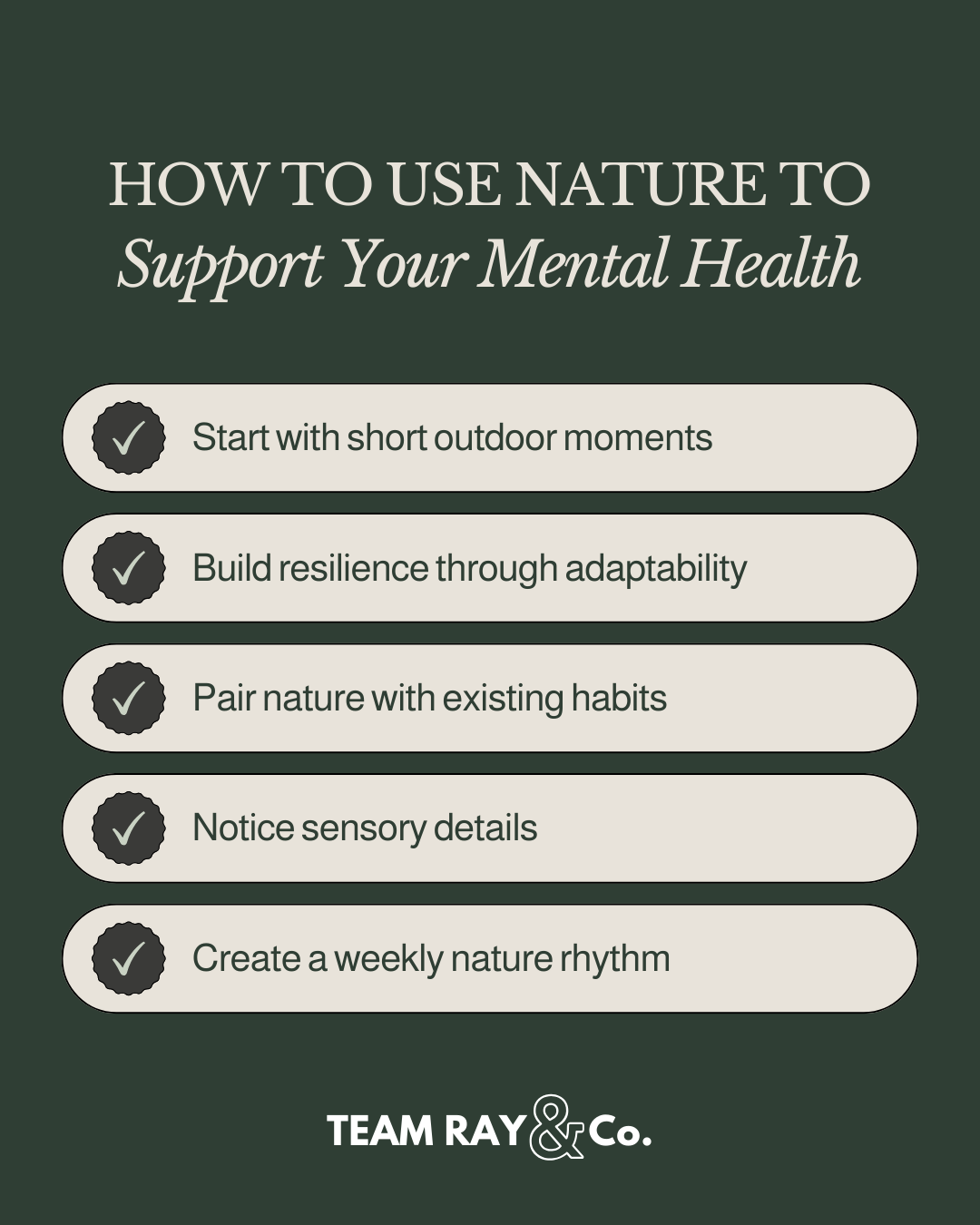
Connecting with nature does not need to feel complicated. These steps can help you build it into your daily life in a realistic way.
Start with short outdoor moments
Spend ten to twenty minutes outside each day if possible. A walk around the block, sitting in a nearby park, or standing in the sun can help reset your nervous system.Bring nature into your living space
Add a few plants to your home. Choose low-maintenance options and place them where you will see them often. Caring for plants creates calm through routine and attention.Pair nature with existing habits
Take phone calls while walking outside. Eat meals near a window or outdoors when possible. Read or journal in a natural setting rather than indoors.Notice sensory details
Pay attention to sounds, colors, and textures. This gentle awareness helps bring the mind into the present and reduces mental noise.Create a weekly nature rhythm
Schedule time for longer outdoor experiences such as visiting a park, trail, or garden. Treat this time as supportive rather than optional.
When Access to Nature Feels Limited
Not everyone has a park, garden, or forest nearby. Even in urban spaces or busy routines, you can still invite nature into your life. Small adjustments can provide meaningful moments of calm and connection.
Consider these gentle ways to bring nature to you:
Grow plants in small spaces
Even a few potted plants on a balcony, windowsill, or tabletop can create a sense of green and life. Choose low-maintenance options such as succulents, herbs, or small leafy plants. Caring for them—watering, pruning, or simply observing their growth—can be meditative and grounding.Maximize natural light
Sunlight has a profound effect on mood and focus. If you cannot go outside, spend time near windows where sunlight filters in. Open curtains, let the light in, or even move your workspace closer to a bright window to feel more connected to the natural world.Take micro outdoor breaks
Short moments outdoors can be surprisingly restorative. Step outside for a few minutes during a workday, stretch on a balcony, or walk around the block. Even five to ten minutes can help reduce stress, refresh your mind, and restore your energy.Incorporate natural elements indoors
If outside time is very limited, bring the outdoors in. A small water fountain, nature sounds, natural textures, or nature-themed artwork can subtly shift your environment. These cues remind the mind of natural rhythms and create a sense of peace.Use mindful observation
Whether you are indoors or outside, take a moment to notice the small details around you. Look at the shape of leaves, listen to birds or distant traffic, notice the texture of a plant, or feel the sunlight on your skin. Even brief attention to natural elements can reduce mental noise and bring you into the present moment.
Even when full access to nature is not possible, these small adjustments add up. They create pockets of calm throughout your day, giving your mind and body repeated opportunities to reset. Consistency matters more than duration—regular, intentional moments with nature, however brief, support mental clarity, emotional balance, and overall well-being.
A Gentle Reminder
Nature supports mental health in quiet, steady ways. It does not ask for effort or performance. It simply offers space.
Whether you step outside for a few minutes, care for a plant, or sit near a window, these moments help the mind settle and the body rest. Over time, they become part of a rhythm that supports balance and well-being. Start where you are. One small moment is enough.
